Cox Communications v. Sony Music Entertainment
Digest
Internet service providers like Cox Communications connect millions of Americans to the digital world, but what happens when their customers use that connection for illegal piracy? Cox was hit with a billion-dollar verdict for not terminating accounts of repeat copyright infringers. The Supreme Court must now decide the line between providing a neutral service and illegally contributing to copyright theft. Is an ISP liable just for knowing its service is used for infringement and failing to stop it, or must it show a specific purpose to encourage piracy? Cox argues it cannot be held liable for user misconduct without proof it actively fostered the infringement. Sony Music contends that knowingly providing the essential tool for piracy to habitual offenders makes Cox an accomplice. This decision will determine whether ISPs become the internet's copyright police, with the power to cut off service, or if creators will lose a key tool in the fight against online piracy.
Key Moments
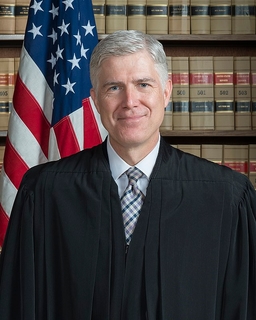
Justice Gorsuch offered Cox's lawyer a narrow path to victory, laying out a simple 'syllogism': The copyright statute doesn't explicitly mention secondary liability, so courts should be cautious. The narrowest liability standard requires 'purpose' to infringe, not just knowledge. The jury here was instructed based on knowledge. 'So, therefore, reverse. Anything wrong with that syllogism?'
This signals a potential off-ramp for the Court. Gorsuch is suggesting a way to rule for Cox on narrow, procedural grounds (a faulty jury instruction) without having to decide the much broader, more difficult question of what the ultimate standard for ISP liability should be.
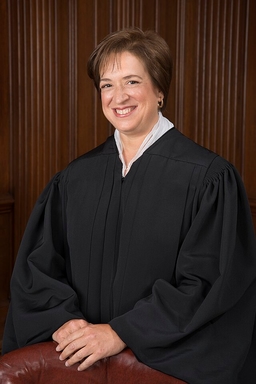
Pressing Cox's lawyer on the implications of his argument, Justice Kagan asked why any ISP would bother complying with the DMCA's 'safe harbor' rules if they couldn't be held liable in the first place. 'Why would anybody care about getting into the safe harbor if there's no liability... do you agree that then the safe harbor provision is not going to be doing anything at all?'
This exchange highlighted a central weakness in Cox's position. It suggests that if Cox wins, a key part of Congress's statutory scheme to balance innovation and copyright protection would become functionally irrelevant, an outcome the Court may be reluctant to endorse.
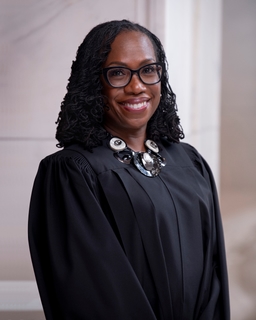
Justice Jackson posed a pointed hypothetical: What if a customer explicitly tells Cox, 'I am addicted to infringing... Cox... is my only option' to get internet? If Cox sells to him, is there still no liability? Cox's lawyer, Mr. Rosenkranz, stuck to his guns, replying, 'That's correct.'
This moment tested the absolute nature of Cox's legal theory. The firm 'no' from Cox's counsel, even in this extreme scenario, clarified the starkness of their position: providing a neutral service, regardless of known intent to misuse it, can never be a culpable act. It forces the justices to confront the real-world edges of this legal rule.
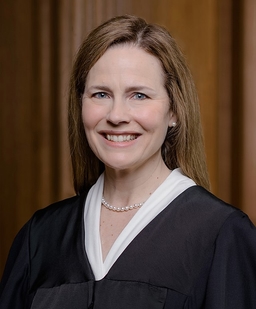
Justice Barrett escalated the stakes by swapping copyright infringement with a more heinous crime. She asked if, under Cox's theory, Twitter would be liable if it 'knew that a particular account was being used for child trafficking and didn't take it down?' Cox's lawyer conceded that under his theory, there would be no liability unless the Court carved out a special exception for physical harm.
This hypothetical reveals the broad, cross-cutting implications of the legal rule the Court is being asked to adopt. It shows that a decision here about copyright could set a precedent for aiding-and-abetting liability across the internet for much more dangerous activities, a consequence that likely gives the justices pause.

Challenging Cox's portrayal of itself as a passive bystander, Justice Sotomayor stated, 'You did nothing... your client's sort of laissez faire attitude... is probably what got the jury upset... you know that a particular location is infringing, and most of the time you're doing nothing. Why aren't you contributing to that infringement?'
This comment shows deep judicial skepticism toward Cox's narrative. Justice Sotomayor is focusing on the specific facts of Cox's inaction, suggesting she views the company's conduct as more blameworthy than its legal arguments let on and signaling she may be unwilling to grant them a broad legal shield.
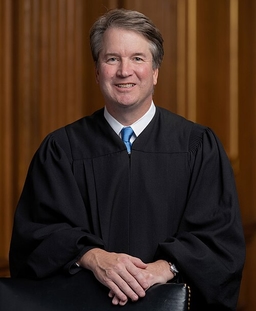
Justice Kavanaugh zeroed in on the central legal term, stating, 'On the word 'purpose,' I think that's going to be key and it's kind of a slippery word... I want to make sure mere knowledge, not good enough. What is good enough... to show purpose?'
This signals that the case, for some justices, will turn on the precise definition of the mental state required for liability. Kavanaugh is looking for a clear, workable rule that distinguishes blameworthy conduct from ordinary business, and his questioning sought to pin down exactly what concrete actions could prove 'purpose.'
Arguing for Sony Music, Mr. Clement proposed a standard short of 'purpose' but more than mere awareness: an ISP is liable when it provides service to a 'specific known infringer, knowing that infringement is substantially certain to follow.' He framed this as a form of 'intent' rooted in common law.
This was the respondent's attempt to offer the Court a middle ground. By framing the standard as 'intent' based on 'substantial certainty,' Clement tried to connect his position to traditional legal principles while avoiding the high bar of 'purpose' that recent Supreme Court cases seemed to favor.
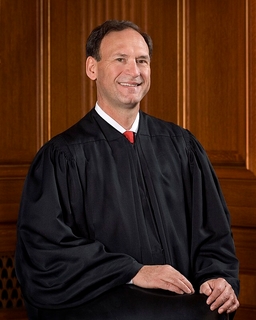
Justice Alito questioned the workability of Sony's rule for large, multi-user accounts. 'What is an ISP supposed to do with a university account that has, let's say, 70,000 users?' he asked, expressing doubt that terminating service for such a large and vital institution would be a practical or fair solution.
This reveals a key practical concern motivating the justices. Justice Alito is worried about the real-world collateral damage of Sony's proposed liability rule, suggesting that any standard the Court adopts must be workable not just for individual home accounts but for complex, shared internet access points.
Arguments
Petitioner
The petitioner, Cox Communications, argues that it cannot be held liable for its customers' copyright infringement without proof that it acted with the purpose of fostering that infringement. Simply knowing that some users misuse its service is not enough. Cox contends that providing internet access is a neutral, passive act, akin to selling a product like a VCR that has both legal and illegal uses. Under Supreme Court precedents like Sony and Twitter, liability for 'contributory infringement' requires active wrongdoing—what the law calls malfeasance—not merely a failure to act, or nonfeasance. Continuing to provide a generic service to all customers on the same terms is not an affirmative act to help pirates.
Cox warns that a ruling for Sony would have 'cataclysmic' consequences, forcing ISPs to become the internet police. To avoid crushing liability, providers would have to aggressively terminate accounts based on mere accusations. This is especially problematic for multi-user accounts like those at universities, libraries, or apartment buildings, where the actions of a single person could cause an entire community to lose essential internet access. This creates a system where vital communication infrastructure can be cut off without due process, a result Congress never intended.
Furthermore, Cox asserts that the lower court's standard, which bases liability on knowledge, is inconsistent with common law principles of aiding and abetting. True accomplice liability requires that the defendant wishes for the illegal act to succeed and takes steps to make it so. Cox claims it has no such desire; it simply wants to sell internet service. While Cox implemented an anti-infringement program that it claims was 98% effective, it maintains it had no legal duty to do so and that its actions should not be used to create a new, punishing legal standard for the entire industry.
Respondent
The respondent, Sony Music, argues that an Internet Service Provider that knowingly and continuously provides the essential tool for piracy to repeat infringers is liable for materially contributing to that infringement. This isn't a case of a one-time sale of a product; Cox maintains an ongoing relationship with its customers and has the power to stop the illegal activity by terminating the service. Sony contends that when an ISP has specific knowledge that an account is being used for infringement and is 'substantially certain' that the infringement will continue, failing to act makes it an accomplice.
Sony pushes back against Cox's high standard of 'purpose,' arguing that the common law of torts recognizes a broader definition of 'intent.' Under this traditional standard, a person is considered to intend the consequences of their actions if they know those consequences are substantially certain to occur. By continuing to take money from known 'habitual abusers,' Cox demonstrated the necessary intent to be held liable. The record, Sony argues, shows Cox's disdain for copyright law, citing internal emails where employees said 'F the DMCA,' proving this was not an innocent business caught in a bind but a company that chose to profit from piracy.
Moreover, Sony claims that Cox’s legal theory would render a key part of federal copyright law—the Digital Millennium Copyright Act (DMCA)—a 'dead letter.' Congress created a 'safe harbor' in the DMCA to shield ISPs from liability, but only if they follow certain rules, including terminating repeat infringers. If there is no underlying liability for failing to terminate infringers, as Cox claims, then the safe harbor and its incentives to cooperate with copyright holders become meaningless. Without this tool, creators would be left with no scalable way to fight mass online piracy, threatening the entire creative economy.