Rutherford v. United States
Digest
A man is serving a decades-long sentence for armed robbery that would be significantly shorter if imposed today under the First Step Act of 2018. The Supreme Court is now deciding whether federal judges, when considering "compassionate release," can count such a sentencing disparity as an "extraordinary and compelling reason" for a reduction, even though Congress explicitly chose not to make the new law retroactive.
The inmate’s attorneys argued that the compassionate release statute gives judges broad discretion to consider the "totality of the circumstances." They stressed that the U.S. Sentencing Commission, which Congress authorized to set the rules, permits considering these disparities as one factor among many. The government countered that this allows judges and an administrative agency to effectively override a direct policy judgment by Congress. Several justices expressed concern that this would create a form of "judicial parole," undermining sentences lawmakers intended to be final.
If the Court sides with the inmate, thousands of people serving lengthy sentences under old laws could seek reductions based on more lenient modern standards. If it sides with the government, they must complete sentences that Congress has since deemed excessively long for the same crimes.
Key Moments

Justice Thomas kicked off the skeptical questioning by telling the petitioner's lawyer it seems 'rather odd' to use Congress's specific decision not to make a law retroactive as the compelling reason to, in effect, make it retroactive for his client.
This went straight to the heart of the government's case. It framed the issue not as a matter of compassion, but as a direct contradiction of a clear legislative choice, signaling that key conservative justices view this as a separation-of-powers problem.

After hearing the petitioner's argument, the Chief Justice dryly remarked, 'Well, you really shouldn't call it a mandatory minimum then. You probably should call it something like the presumptive minimum depending upon subsequent developments.'
This is a classic Roberts move. He used a clever reframing to suggest the petitioner's position would destroy the entire concept of a 'mandatory' sentence, turning a firm command from Congress into a weak suggestion that judges could ignore later. It reveals deep skepticism about the practical impact on the legal system.
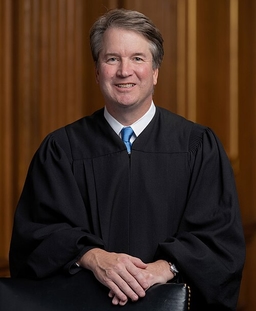
Justice Kavanaugh stated his concern was that the First Step Act was 'heavily negotiated' with retroactivity being a key bargaining chip. He argued that the Sentencing Commission was now trying to 'countermand Congress's judgment,' calling it a 'seismic structural change to our criminal justice system.'
He explicitly linked this case to the messy reality of how laws are made. His point is that deals were cut in Congress based on the law being prospective-only. Allowing judges to undo that bargain disrespects the legislative process and creates a major constitutional conflict between the branches of government.

Justice Barrett posed a sharp hypothetical: Before the First Step Act, could a judge who just personally felt a sentence was 'excessively long' use that 'disquiet' as an extraordinary and compelling reason for release? Or is the new law required?
This was a surgical strike to find the petitioner's limiting principle. She was testing whether this opens the door for any judge to reduce any sentence they simply disagree with, or if it's truly limited to disparities created by a specific, subsequent act of Congress. The answer has huge implications for the scope of judicial power.

The petitioner's lawyer tried to distinguish between a judge improperly disagreeing with Congress's policy and properly finding a specific sentence too harsh. Justice Alito shot back, 'I don't quite see the difference between those two things.'
This blunt remark shows that at least one justice believes the petitioner's core distinction is meaningless—a legal fiction. If a judge is reducing a sentence because a new law would be shorter, he sees that as a direct disagreement with the policy of the old law, no matter how it's phrased.
When pressed by Justice Barrett on whether a judge's simple 'disagreement' with a sentence was enough, the attorney pivoted. He avoided a direct 'yes' or 'no' and shifted to talking about the 'total mix of circumstances' and how the 'length of sentence is the key fact.'
This pivot revealed the weak point in the petitioner's argument. He couldn't concede that pure disagreement is enough, because that would be a judicial usurpation of legislative power. His retreat to the 'totality' argument is a defensive move to frame the disparity as just one neutral data point, not a judicial thumb on the scale against Congress.
The government's lawyer painted a vivid picture: A judge is forced to give a mandatory minimum, but says in open court, 'I'd be very open to a compassionate release motion.' The prisoner files one the next day, and 30 days later, the judge reduces the sentence. 'That cannot be the way this works,' he argued.
This hypothetical made the government's abstract separation-of-powers argument concrete and alarming. It transforms the issue from a compassionate look-back years later into an immediate judicial veto, a scenario that would clearly undermine the entire structure of mandatory sentencing.
Arguments
Petitioner
The petitioner argues that a judge deciding whether to grant an early release from prison should be allowed to consider one crucial fact: that the inmate is serving a sentence far longer than what someone convicted of the exact same crime would receive today. This situation exists because of the First Step Act, a major 2018 law passed by Congress that significantly reduced sentences for certain gun offenses. For example, a person sentenced in 2010 might have received a mandatory 45-year sentence, while someone committing the identical crime today would get only 25 years. The petitioner contends that this massive disparity, created by a deliberate change in the law, can be one of the "extraordinary and compelling reasons" a judge needs to find in order to grant a sentence reduction, also known as compassionate release.
The government’s main objection, echoed by several justices, is that Congress specifically chose not to make the First Step Act retroactive, meaning it doesn't automatically apply to people sentenced before it passed. They argue that letting judges use this non-retroactive law to reduce old sentences is a backdoor way of defying Congress's clear instructions. The petitioner's response is that they are not asking to make the law retroactive for everyone. Instead, they argue that compassionate release is an entirely separate legal tool designed for individual, case-by-case decisions. It acts as a safety valve. For a specific person like Mr. Rutherford, who may also have a great prison record, serious health issues, and family needs, the fact that his sentence is now considered disproportionately harsh by modern standards should be a powerful factor in the judge's "totality of the circumstances" analysis.
Furthermore, the petitioner points out that Congress delegated the power to define "extraordinary and compelling reasons" to an expert agency called the U.S. Sentencing Commission. Recently, the Commission issued official guidance stating that judges can consider these kinds of legal changes and the sentencing disparities they create. Therefore, the petitioner argues, a judge who considers this factor isn't going against Congress; they are following the rules set by the very agency Congress empowered to make them. This isn't about a judge simply disagreeing with a mandatory minimum sentence out of personal opinion. It's about a judge recognizing that a subsequent act of Congress has fundamentally redefined what a just sentence for a particular crime looks like, and then weighing that new reality alongside all the other personal details of the inmate's case.
Ultimately, the argument is about fundamental fairness and judicial discretion. The petitioner claims that blinding a judge to the fact that an inmate is serving decades longer than modern law would ever allow is illogical and unjust. It forces the court to ignore a profoundly important piece of information when evaluating whether a sentence remains appropriate. They argue that allowing this factor to be considered doesn't open the floodgates for releases, as judges still have the final say and deny the vast majority of these motions. It simply permits judges to use all relevant information, including society's evolving standards of punishment as reflected in new laws, to correct sentences that are, by today's standards, truly extraordinary.
Respondent
The respondent argues that allowing judges to reduce sentences based on a new law that Congress specifically made non-retroactive is a direct attack on the authority of Congress. The case centers on the First Step Act, a law that changed some very long mandatory minimum sentences for gun crimes. However, Congress made a deliberate choice: the changes would only apply to people sentenced after the law was passed, not to those already in prison. The respondent, the United States government, contends that prisoners are now trying to get a "do-over" through a legal backdoor called "compassionate release." This mechanism is supposed to be a rare safety valve for truly "extraordinary and compelling reasons" personal to an inmate, like a terminal illness. Using it to resentence someone because a new law would have been kinder is, in the government's view, ignoring a clear command from the nation's lawmakers.
The government's core fear is that this would transform compassionate release from a limited humanitarian tool into a system of "judicial parole." In the federal system, parole was abolished decades ago to ensure sentences were firm and final. If a judge can decide that a perfectly legal sentence is now too long simply because of a later change in law, that judge is effectively acting as a parole board, second-guessing not only the original sentence but also Congress's decision to not apply the new law retroactively. The government argues that the "reason" for release must be something unique and unforeseen about the inmate's circumstances, not a general disagreement with a sentence that was legally required at the time it was imposed. The fact that a sentence is long, or that it's longer than what a new defendant would get today, isn't an "extraordinary" event; it's the normal, intended result of Congress's decision.
Finally, the respondent warns that the petitioner's approach has no logical endpoint and would create chaos. If a sentencing disparity caused by a non-retroactive law can be a key factor for release, what's to stop this from applying to any change in sentencing law, ever? The government paints a picture of courts being flooded with thousands of motions from inmates every time Congress updates a law. They argue that inmates' lawyers will always be able to find some other minor factor—like good behavior or family connections—and use the new law as the "plus factor" that gets an otherwise insufficient claim over the line. This effectively makes the non-retroactive law the decisive reason for release, creating a system where judges can immediately undo mandatory sentences they disagree with, completely undermining the structure of federal sentencing that Congress has built.