Digest
When a private company running an immigration detention center for the U.S. government was sued by detainees for forced labor, it argued the case should be dismissed because it was just following federal orders. The trial court disagreed, and the company wanted to appeal that decision immediately. The Supreme Court is now deciding whether government contractors can pause a lawsuit to appeal a denial of "derivative sovereign immunity," or if they must endure a full trial first. This case tests the limits of the collateral-order doctrine, a rule allowing immediate appeals for issues like immunity from suit.
GEO Group argued that its protection is a true immunity, necessary to prevent lawsuits from disrupting vital government functions and discouraging companies from public service. The detainees, supported by the U.S. government, countered that this is merely a defense against liability, not a right to avoid trial altogether, and is too fact-intensive to be decided separately from the main case. Justices repeatedly pressed the company on why the government, whose interests it claims to protect, was arguing against it.
A ruling for GEO Group would grant thousands of private contractors a powerful tool to delay or defeat lawsuits before a trial. A loss would mean contractors must defend themselves through the entire litigation process before appealing, ensuring plaintiffs get their day in court but potentially increasing costs for government services.
Key Moments
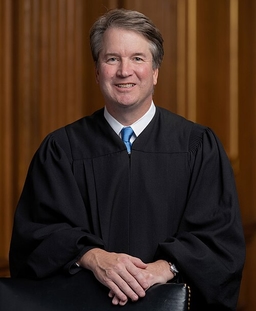
Why is the government on the other side from you then? I mean, that seems like a big hurdle.
This question exposed the biggest practical weakness in GEO Group's case. It's hard to argue you're protecting the government's interests when the government itself shows up to court to argue against you. It immediately framed the contractor as being at odds with the client it claims to serve.

Yearsley was never an immunity case... it's really a question of relief from liability... So I don't know why the reliance on or even claiming this is an immunity defense.
This was a direct rejection of the petitioner's entire legal foundation. Sotomayor wasn't just questioning their argument; she was declaring its premise historically and legally false. It signaled that GEO Group had a fundamental credibility problem with its core claim.

Is your client saying 'I did nothing wrong'? Or is your client saying 'even though I did something wrong... I am protected from legal consequences'?
This brilliant hypothetical forced the petitioner to define their defense. The first option ('I did nothing wrong') sounds like a regular merits defense that belongs at trial. The second ('I'm protected even if I did wrong') sounds more like a true immunity. It was a strategic question designed to show that the contractor's claim doesn't neatly fit into the special 'immunity' box required for an immediate appeal.

It seems to me like all the arguments you're making... should they be directed to Congress?
This reflects a 'judicial restraint' philosophy. Justice Barrett suggested that even if the contractor's policy arguments are good, the Court is the wrong audience. It's Congress's job to create new rules for appeals, not the judiciary's. This provides an off-ramp for the Court to rule against GEO Group without touching the substance of their defense.

Why isn't Yearsley better understood as a defense than an immunity?
This simple, direct question, echoing Justice Sotomayor, showed a coordinated skepticism among the Court's liberal wing. It crystallized the central issue of the case and signaled a unified front that the petitioner's re-characterization of the Yearsley doctrine was not persuasive.
When asked by Justice Kavanaugh why the government was opposing him, he deferred, suggesting, 'I was going to suggest that you ask Dr. Joshi [the government's lawyer] that very question.'
This pivot was a clear signal of weakness. Unable to provide a convincing answer to the most obvious question, the attorney tried to deflect. It showed the Court that the petitioner had no good explanation for the government's damaging opposition.
He opened his argument by joking, 'Why don't I just start by addressing why are we on this side of the lectern instead of the other.'
This showed tactical awareness. The government's lawyer knew that the Court's biggest question was why the government was opposing its own contractor. By addressing it immediately and with humor, he demonstrated confidence and took control of the narrative from the outset.
In rebuttal, he argued that denying an appeal creates an illogical 'carveout' where government employees get immediate appeals for immunity but the contractors working alongside them do not.
This was the petitioner's strongest counter-punch. By framing the issue as one of fairness and parity, he tried to make the opposing view seem arbitrary and inconsistent, appealing to the Court's desire for logical, consistent rules.
Arguments
Petitioner
The petitioner argues that a private company hired to do the government's work should be able to immediately appeal a court's decision that forces it to stand trial. Normally, in the American legal system, you can only appeal a case after it's completely finished and a final judgment is entered. This "final judgment rule" prevents endless delays. However, the Supreme Court has created a narrow exception called the "collateral-order doctrine" for certain crucial issues that are separate from the main lawsuit and too important to wait. The petitioner, GEO Group, claims its situation fits this exception. They argue that when a contractor is sued for simply following the government's direct and legal orders, they have a special protection called "derivative sovereign immunity," which is essentially a hand-me-down version of the government's own immunity from being sued.
This protection, the petitioner contends, isn't just a regular defense to be used at trial; it's an "immunity from suit" itself. This is the most critical distinction in their entire argument. Think of it like this: a "defense" is something you use to win a fight, while an "immunity" is a special status that says you shouldn't have been forced into the fight in the first place. The petitioner argues that the whole point of their immunity is to avoid the burdens of a lawsuit—the time, the expense, the distraction—altogether. If a judge denies this immunity and they have to wait until the end of a long and costly trial to appeal, the protection has already been lost. The right not to be sued is destroyed the moment the trial begins, making an appeal at the end pointless.
The petitioner bases this claim on a long-standing legal principle from a case called Yearsley. This principle holds that if a contractor is acting as the government's agent, followed valid government instructions, and the government's project was constitutional, then the contractor cannot be held liable. The lawsuit should be against the government, which is the real party responsible. The petitioner argues that this isn't about proving they did nothing wrong; it's about establishing that their actions were, for legal purposes, the government's actions. Because they were standing in the sovereign's shoes, they should get the same procedural protection as a government official who claims immunity—the right to an immediate appeal to get the case against them thrown out before trial.
Ultimately, the petitioner warns that this isn't just a technical legal issue; it's about the government's ability to function. The government relies on private contractors for everything from national defense and infrastructure to running federal programs. If these contractors can be dragged through years of litigation for simply doing what they were told, two things will happen: many will refuse to take on essential government work, and those who do will have to charge taxpayers massively inflated prices to cover the enormous legal risk. Denying an immediate appeal, they argue, creates a strange loophole where every government employee involved in a project can appeal immediately, but the contractor working alongside them is left to face a potentially ruinous lawsuit alone, ultimately harming the government itself.
Respondent
The respondent argues that a government contractor like GEO Group is not entitled to a special, immediate appeal just because a judge refuses to dismiss a lawsuit against them. Normally in the American legal system, you can only appeal a court's decision after the entire case is finished and there's a "final judgment." This rule prevents cases from being endlessly delayed by appeals on every little ruling. The contractor is asking for a rare exception called the "collateral order doctrine," which is reserved for situations where a defendant has a true "immunity from suit"—a right not just to win the case, but to avoid the burden of a trial altogether. The respondent's core point is that the contractor's legal protection isn't this special type of immunity; it's just a very strong defense.
The key difference is between an "immunity from suit" and a "defense to liability." Think of true immunity, like for a diplomat or a judge performing their duties, as a shield that stops a lawsuit before it can even start. The respondent argues that the contractor’s protection, based on a century-old case called Yearsley, is more like a sword to be used during the fight. The Yearsley defense basically says, "If I was just following the government's specific and legal instructions, you should sue the government, not me." This is a powerful argument for why the contractor should ultimately win, but it doesn't grant them a special right to walk away from the courthouse without ever having to make that argument. It’s a defense about who is responsible for the harm, which is the central question of the lawsuit, not a separate status that puts them above the lawsuit itself.
To support this, the respondent points to two powerful, common-sense facts. First, if granting contractors an immediate appeal is so critical to protect the government from the costs and hassles of litigation, why is the U.S. government itself arguing against the contractor in this very case? The government’s position severely undermines the claim that this special protection is necessary for the functioning of government. Second, deciding whether a contractor was truly just following orders isn't a simple legal question. It requires a judge to dig into a mountain of messy facts: What did the contract say? What did the supervisor's emails direct? What did the employee handbooks require? What did the contractor actually do? This deep dive into the merits of the case is the exact opposite of the clean, separate legal issue that the collateral order doctrine was designed for.
Ultimately, the respondent contends that the contractor is trying to rebrand a standard defense as a super-powered immunity to gain a procedural shortcut that the law doesn't allow. They argue that creating a new category of immediate appeals for contractors would weaken the important "final judgment rule" and open the door for all sorts of defendants to pause their trials by claiming they, too, have a right to avoid litigation. The proper course, they insist, is for the contractor to make their case in the trial court like almost every other defendant and, if they lose, appeal the decision once the entire case is over.