Landor v. LA DOC
Digest
When prison guards forcibly shaved a Louisiana inmate’s head in violation of his religious beliefs, it raised a critical question: can individual government employees be forced to pay damages for such an act? The Supreme Court weighed whether the Religious Land Use and Institutionalized Persons Act (RLUIPA) allows individuals to sue state officials in their personal capacity for money damages. This law uses Congress’s power to attach conditions to federal funding.
The inmate’s lawyer argued that RLUIPA’s text authorizing suits against officials for “appropriate relief” clearly includes damages, the only meaningful remedy for a one-time violation. The state countered that this stretches Congress's federal funding power too far, as individual guards never signed a contract with the federal government or consented to personal liability. The justices explored whether this theory could expose a wide range of state employees, from coaches to doctors, to new forms of federal lawsuits.
The ruling will determine whether people in prisons, hospitals, or other federally funded institutions can sue individual officials for financial compensation when their religious freedoms are violated, defining the line between federal power and state employees’ personal accountability.
Key Moments
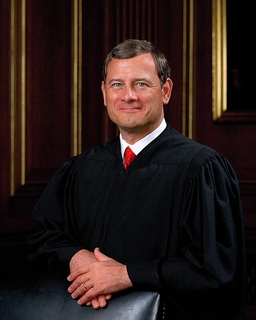
The Chief Justice called the petitioner's core argument—that a prison guard 'consents' to be sued just by taking a job—a 'legal fiction.' He noted that in the real world, guards aren't handed the state's federal funding agreements and told to study them because they'll be personally bound by them.
This statement goes to the heart of the case. It signals powerful skepticism from the Chief Justice about the practical foundation of the petitioner's entire theory, suggesting he sees it as disconnected from reality.
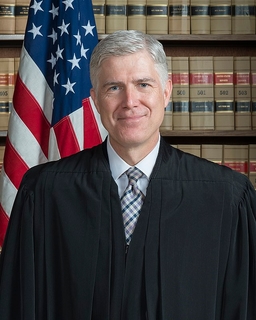
He asked if the petitioner's theory would allow Congress to pass a law letting a female athlete sue a university coach for a million dollars if the coach allows a transgender athlete on the team. He also asked if a father could sue a state employee for a million dollars if she gets an abortion.
This is a classic 'parade of horribles' hypothetical. Justice Gorsuch is testing the limits of the legal theory and revealing his concern that it could be used as a tool to create massive personal liability for individuals on hot-button political issues, all through the backdoor of federal funding.

Taking Justice Gorsuch's point further, she asked why this theory of liability would stop at employees. Could a parent who sends their child to a federally-funded school be sued by that child for not using their preferred pronouns?
This hypothetical pushes the petitioner's logic to its breaking point. It's designed to show that if consent is inferred so broadly, there's no clear place to stop, potentially extending liability from government officials to private citizens in an unprecedented way.
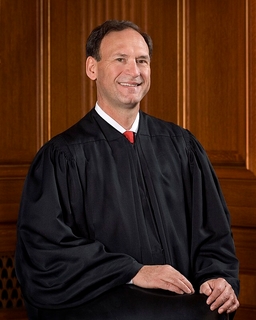
He pointed out that in a prior case, the Court found RLUIPA's language wasn't clear enough to force the state to pay damages. He then asked, 'If the language... was not clear enough... why is it clear enough' to put an individual employee on notice that they have to pay damages personally?
This is a legal trap. Justice Alito is suggesting a deep inconsistency in the petitioner's argument. He's implying that the standard for clarity should be at least as high for an individual person as it is for a state, and since the statute already failed that test once, it should fail again here.
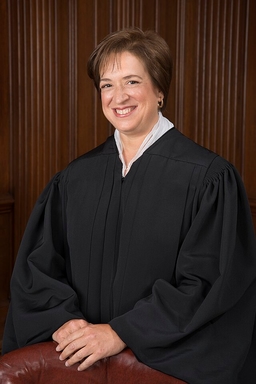
Drawing a comparison to other laws, she likely asked something like: 'For decades, we've allowed individuals to sue state officials for damages under Section 1983 to enforce rights created by other Spending Clause statutes. What makes RLUIPA so different that we would suddenly invent a special, heightened notice requirement for the individual officer?'
This question, reflecting the view of the liberal wing, frames the case differently. It suggests that suing individual officials for damages is the normal, established way of enforcing federal rights, and it's the respondent who is asking for a radical change by carving out a special exception for RLUIPA.
He hammered the petitioner's lawyer, noting, 'The circuits are unanimously against you and have been for many, many, many years.' Justice Barrett echoed this, asking how the law could possibly be considered 'clear' if every single federal appeals court to consider it has ruled the other way.
This is a practical and powerful attack. The very concept of Spending Clause liability rests on the recipient having 'clear notice.' The fact that no appellate judge in the country agrees with the petitioner's reading of the law is strong evidence that the notice is, at best, hopelessly unclear.
When pressed by Justice Barrett to give a 'yes or no' answer on whether his theory would allow the extreme hypotheticals posed by Justice Gorsuch, the attorney tried to dodge. After being cut off and forced to answer, he conceded, 'If the condition is valid... then I'll say yes.'
This was a critical moment. The attorney's reluctance, followed by a forced concession, made his argument seem dangerous and its implications limitless. It confirmed the fears the conservative justices were raising and weakened his position significantly.
The respondent's lawyer likely framed the issue simply: 'This isn't a constitutional claim. It's a contract claim. The prison guard is an employee of one of the parties; he is not a party himself. You can't sue an employee of Ford personally if the company breaches a supply contract.'
This analogy crystallizes the respondent's entire case. By framing it as a simple matter of contract law rather than complex civil rights doctrine, it offers the Court a straightforward, common-sense path to rule in their favor, sidestepping the petitioner's claims about unenforceable rights.
Arguments
Petitioner
The petitioner argues that a prison official who violates an inmate’s religious freedom should have to personally pay for the harm they caused. The case centers on a federal law called the Religious Land Use and Institutionalized Persons Act (RLUIPA), which was passed to protect the religious rights of people in prisons that receive federal funding. It’s essentially a deal: states get money for their prisons, and in return, they promise to accommodate religious practices. The petitioner’s client, an inmate, had his religiously significant hair forcibly shaved off by guards, even after showing them court rulings that said he had a right to keep it. Without the ability to sue the guards for damages, the petitioner claims the law is toothless, as officials can violate rights with impunity and the inmate has no way to be compensated for the assault.
The core of the argument is that the text of RLUIPA is perfectly clear. The law explicitly says a person can sue an "official" for "appropriate relief." In the legal world, suing an "official" is the standard way of saying you are suing them in their individual capacity, as a person, not just as a government employee. And when you sue a person, "appropriate relief" has always been understood to include money damages to compensate for the wrong done. The petitioner insists that if damages aren't available, this part of the law is meaningless. You can already sue the government to get an order to stop bad behavior (an injunction), so the only unique purpose of suing an official personally is to hold them accountable by making them pay for the harm they inflict.
This leads to the main constitutional puzzle: how can a low-level prison guard be personally liable for conditions attached to a federal funding agreement they never signed? The petitioner offers two related answers. First is a "chain of consent" theory: the state voluntarily accepted the federal money and its conditions. When the guards voluntarily took their jobs at that state prison, they implicitly agreed to abide by those same conditions as part of their employment. Second, even if the guards didn't personally consent, Congress has the power to protect the integrity of its spending programs. In a previous case called Salinas, the Supreme Court allowed for criminal charges against a prison official who took a bribe in a federally-funded prison. The petitioner argues that if Congress can impose prison time to protect its programs from corruption, it can surely allow for civil damages to ensure the very purpose of the program—protecting religious liberty—is not undermined by the officials running it.
Ultimately, the petitioner claims that Congress passed RLUIPA to restore strong religious freedom protections that had been weakened by a prior Supreme Court decision. Before that decision, suing officials for damages was a standard remedy. By using language nearly identical to other religious freedom laws where damages are allowed, Congress clearly intended to bring back that powerful enforcement tool. The petitioner argues that allowing officials to violate these rights without facing personal financial consequences would defeat the entire purpose of the law, turning a guaranteed right into an empty promise.
Respondent
The respondent argues that an individual prison guard cannot be sued for his personal money over a violation of the Religious Land Use and Institutionalized Persons Act (RLUIPA) because the law is based on a contract that the guard never signed. Congress passed RLUIPA using its "Spending Clause" power, which works like a deal: the federal government offers money to states for things like prisons, and in return, the states promise to follow certain rules, such as protecting inmates' religious rights. The respondent, representing the Louisiana Department of Corrections, agrees that the state itself is bound by this deal. This means a prisoner can sue the state to force it to change a policy (an "official capacity" suit). However, they argue it's a massive leap to say that an individual guard, simply by accepting a job, has personally consented to be on the hook for money damages if a policy is violated. It's like holding a company's mailroom clerk personally responsible for paying a fine if the CEO breaks a corporate contract with a supplier.
Building on this contract idea, the respondent contends that for such a surprising and significant obligation to be valid, the guard would need "clear notice" that he was accepting personal financial liability. The reality, they argue, is the exact opposite. For over two decades, every single federal appeals court that considered this issue concluded that individuals could not be sued for damages under RLUIPA. The respondent is essentially asking the Supreme Court: how could any state or its employees have been clearly aware they were agreeing to personal liability when the entire legal landscape unanimously said such liability didn't exist? To retroactively declare the law was clear all along ignores the real-world understanding under which every state and prison official has been operating for a generation.
Finally, the respondent warns that the petitioner’s argument would radically expand the federal government's power in a way that bypasses the states. The Spending Clause is supposed to be a negotiation between the federal government and state governments. If the Court rules that this power can be used to impose personal financial liability directly on millions of individual state employees—from prison guards to public school teachers to university coaches—it transforms a deal with the state into a direct federal command over its workers. This would allow Congress to create laws where any individual state employee could be sued for personal damages over controversial policy issues, fundamentally altering the balance of power between the federal government, the states, and the individuals who work for them. The respondent insists that if Congress wants to create such a powerful new remedy, it must do so explicitly by passing a new law, not by asking the Court to reinterpret this one.