Learning Resources, Inc. v. Trump, President of U.S.
Digest
After President Trump imposed sweeping tariffs on global imports by declaring a national emergency, the Supreme Court weighed whether he had the authority to do so. The case hinges on whether the International Emergency Economic Powers Act (IEEPA), a 1977 law designed for sanctions, also grants the president the power to set tariffs—a form of tax the Constitution gives to Congress.
The government argued the law’s phrase “regulate importation” is broad enough to include tariffs, a classic and flexible tool of foreign policy. Challengers countered that Congress never delegates its core taxing power implicitly, warning that the government’s reading creates a “one-way ratchet,” giving presidents a permanent, unchecked economic tool. Justices questioned whether Congress could ever reclaim such a vast power once it was given away.
The ruling will determine whether the president can unilaterally reshape the economy by declaring a foreign-facing emergency, or if the power to set taxes on goods remains firmly with Congress. A decision for the government would grant future presidents a potent tool to bypass lawmakers on major economic issues, from trade deficits to climate change.
Key Moments
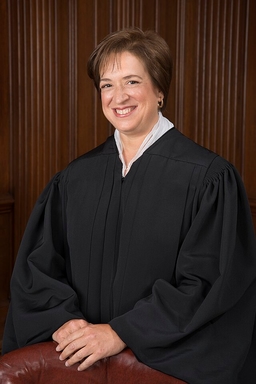
She pointed out that setting tariffs and regulating commerce are 'quintessential Article I powers' that belong to Congress. She then asked the President's lawyer, 'What kind of Article II [presidential] powers are you relying on?'
This exchange framed the entire case around the separation of powers. Justice Kagan signaled that she sees this not as a simple matter of interpreting a statute, but as the executive branch trying to seize a power that the Constitution explicitly gives to the legislature.
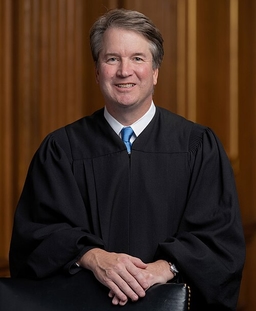
He presented the biggest challenge to Learning Resources, asking why a 'rational Congress' would let the President do something extreme like ban all trade with a country, but not something seemingly lesser, like impose a 1% tariff. He called this an 'odd donut hole' in the law.
This is the core of the government's best argument. Justice Kavanaugh revealed his skepticism that the law should be read in a way that produces what he sees as an illogical result, suggesting he might favor a more practical, power-inclusive interpretation.

She reminded the President's lawyer that IEEPA was passed specifically to limit presidential authority after concerns about its abuse. She said it seems 'inconsistent' to interpret a law designed to constrain the President as giving him 'essentially unlimited authority.'
This strikes at the heart of the government's argument by using historical context. Justice Jackson is arguing that the President's interpretation is the exact opposite of what Congress intended, a powerful argument against broad executive power.
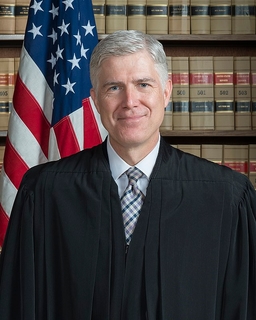
He warned of a 'one-way ratchet' where Congress gives power to the President, who will then inevitably veto any attempt by Congress to take it back. Power flows to the executive branch and never returns to the people's representatives.
This reveals a deep structural concern about the long-term erosion of legislative power. Justice Gorsuch is thinking beyond this specific case to the precedent it would set, suggesting he sees this as a dangerous step toward concentrating too much power in the presidency.

She posed a pointed hypothetical: Could a President declare a global warming emergency and then use that 'foreign-facing' threat to justify a domestic policy like student loan forgiveness, bypassing legal roadblocks like the Major Questions Doctrine?
She's testing the 'limiting principle' of the government's argument and finding it lacking. This hypothetical highlights the potential for abuse, suggesting that a ruling for the President could give future administrations a blank check to enact their domestic agenda under the guise of a foreign emergency.
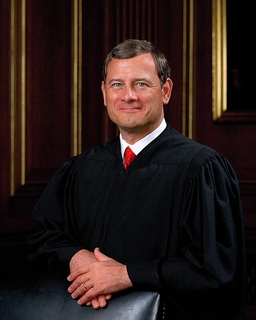
He challenged the government’s heavy reliance on a past case, Dames & Moore, pointing out that the Court in that very decision said it was 'a very narrow decision' with 'little precedential value' that should be confined to its specific facts.
The Chief Justice is methodically dismantling a key pillar of the government's legal foundation. By questioning the validity of their main precedent, he signals he's unconvinced that history supports such a sweeping view of presidential authority.
Responding to Justice Kavanaugh's 'donut hole' analogy, the company's lawyer quipped, 'It's not a donut hole; it's a different kind of pastry.'
This was a clever and effective way to make a serious legal point. He argued that banning trade (an embargo) and taxing it (a tariff) aren't just different amounts of the same power—they are fundamentally different powers. One is a tool of prohibition, the other is a form of taxation, and Congress only authorized the first.
When pressed by Justice Gorsuch on whether the President could impose a tariff on gas-powered cars to fight climate change, the lawyer conceded, 'It's very likely that that could be done.'
This was a crucial and possibly damaging admission. It confirmed the fears of several justices that the government's legal theory has virtually no limits, potentially opening the door for any president to use tariffs to implement sweeping economic and environmental policies without congressional approval.
Arguments
Petitioner
The petitioner argues that the President has the authority to impose tariffs because Congress gave him a powerful, all-purpose financial tool for national emergencies. This tool is a law called the International Emergency Economic Powers Act, or IEEPA. It was designed to give the President broad flexibility to deal with "unusual and extraordinary" foreign threats, like a fentanyl crisis or a crippling trade imbalance. The law gives the President the power to "regulate... importation," and the petitioner’s central point is that a tariff—a special fee on imported goods—is one of the oldest and most direct ways to regulate what comes into the country. They claim it would be illogical for Congress to grant the President extreme powers like completely banning all trade (an embargo) but not allow the much more flexible and targeted power of a tariff.
This authority, the petitioner explains, comes from two sources stacked on top of each other. First, the President already has unique, inherent powers in foreign affairs under Article II of the Constitution. Think of this as the President's default setting for dealing with other countries. Second, Congress passed IEEPA, which is like a massive, explicit permission slip from the legislative branch, giving the President its own powers over commerce to use in an emergency. When the President acts with his own constitutional power plus a direct authorization from Congress, his power is at its absolute peak. In this zone of maximum authority, courts are supposed to give the President's actions the "strongest presumption of validity" and interpret his powers as broadly as possible.
A key part of the argument is distinguishing these tariffs from regular taxes. Opponents say only Congress can create taxes. The petitioner responds that these are not "revenue-raising tariffs" designed to fund the government, but "regulatory tariffs" designed to change another country's behavior. The goal isn't to collect money; it's to use economic pressure as a weapon to force foreign nations to stop harmful actions. In fact, the petitioner claims the tariff is most successful when it raises zero dollars, because that would mean the foreign country has already caved to the pressure and changed its policies. Therefore, it's not an unconstitutional tax but a legitimate tool for regulating foreign commerce and protecting national security.
Ultimately, the petitioner warns that taking this power away would have devastating real-world consequences. President Trump, they claim, used these IEEPA tariffs to negotiate critical trade deals worth trillions and to combat threats that are "country-killing." To suddenly rule that this tool is illegal would unravel those agreements, leave the United States vulnerable to retaliation from aggressive nations, and strip the President of a vital instrument for protecting American economic and national security. The argument is that in a dangerous world, the President needs every tool Congress gave him to respond effectively to major, unforeseen crises.
Respondent
The respondent argues that the President has the clear authority to impose these tariffs because the law in question, the International Emergency Economic Powers Act (IEEPA), gives him the power to "regulate importation" during a national emergency. This phrase is the key. For centuries, the most common and essential tool for regulating imports has been the tariff. To suggest that Congress gave the President a whole toolkit to manage foreign trade emergencies but secretly withheld the single most important tool makes no sense. The other side’s interpretation creates what the justices called a "donut hole"—it would mean the President could take the extreme step of banning all trade with a country (an embargo) but couldn't take the much more moderate and flexible step of applying a tariff. The respondent insists that when Congress wrote the words "regulate importation," it meant to include the most obvious and historically significant form of regulation there is.
Crucially, the respondent's argument hinges on a distinction between a "regulatory tariff" and a tax. A tax is designed to raise money for the government. A regulatory tariff, they argue, is a tool of foreign policy designed to change another country's behavior. Its goal isn't to collect revenue; in fact, it's most successful when it collects zero dollars. If the threat of a tariff forces a foreign nation to stop an unfair practice, or it encourages American companies to build factories at home instead of importing goods, then the tariff has worked perfectly without raising a single dime. Because the goal is to regulate commerce and exert leverage in a foreign crisis—not to fund the government—this action falls squarely under the President's authority to manage foreign affairs as granted by IEEPA, not under Congress's exclusive power to tax.
Finally, this broad grant of power is framed as both necessary and historically normal for foreign policy. The world is unpredictable, and Congress cannot possibly foresee every "unusual and extraordinary threat" that might arise. Therefore, since the nation's founding, Congress has given presidents flexible and powerful tools to deal with international crises. This is fundamentally different from domestic issues, where Congress's power is more jealously guarded. The respondent argues that in foreign affairs, the Supreme Court has always recognized that the President needs a freer hand. IEEPA is a modern example of this principle: Congress sets the conditions (the President must declare a national emergency and consult with them), but once those conditions are met, it trusts the President with the broad powers needed to protect the country's economic and national security interests.