Hain Celestial Group v. Palmquist
Digest
A family sued baby food maker Hain Celestial and grocer Whole Foods in Texas state court. Hain, an out-of-state company, moved the case to federal court, arguing the local grocer was only added to block this move—a tactic called "fraudulent joinder." A federal judge agreed, dismissed Whole Foods, and Hain later won at trial. After an appeals court found that dismissal was a mistake, the Supreme Court must decide if the verdict must be thrown out because the case was improperly in federal court from the start.
Hain argued for finality, contending that since only parties from different states remained at the trial's end, the court had proper jurisdiction. It claimed erasing a full trial over an early error would be a colossal waste. The family countered that jurisdiction cannot be created by a court's mistake and being wrongly denied their chosen state court is a fundamental harm. Justices questioned whether jurisdiction was ever truly "cured" while the dismissed party was "lurking," ready to be reinstated on appeal.
A ruling for Hain would make it easier for companies to move cases to federal court, knowing a favorable verdict might survive even a legally flawed removal. A ruling for the family would reinforce a plaintiff's power to keep their case in local court, forcing companies to be certain of their legal grounds or risk having a federal victory erased.
Key Moments
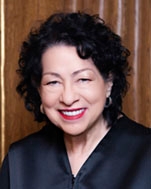
You're ignoring the inherent prejudice here. This plaintiff wanted to be in state court. They were deprived of that tactical opportunity permanently because of an error. Isn't that a fundamental harm in itself?
This directly attacks Hain's 'no harm, no foul' argument. It frames the loss of the chosen forum not as a procedural trifle, but as a material injury to the plaintiff, regardless of the ultimate trial outcome.
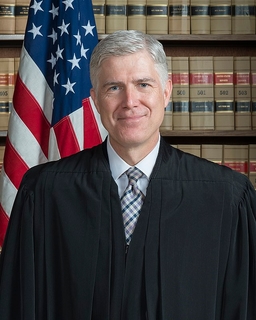
What do we do about the fact that this whole problem was created by your client's improper removal? In terms of fairness... your hands aren't exactly clean here.
This introduces an 'unclean hands' doctrine, suggesting it's unfair to let a party benefit from its own mistake. It shifts the focus from pure legal mechanics to the equities of the situation.
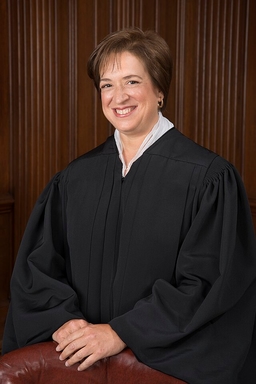
Even after the local defendant was dismissed, they could always get back into the suit on appeal. This means the jurisdictional defect was never actually cured, because the threat of destroying diversity was always there.
This is a powerful legal theory that undermines Hain's entire case. If jurisdiction was never perfected, the federal court never had the power to issue a final judgment, making the 'finality' argument irrelevant.
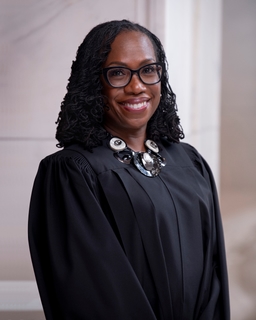
Doesn't your whole argument depend on the district court being right about dismissing Whole Foods? The appeals court said that was wrong. If they were wrong, you have a jurisdictional defect from the start.
This highlights the circular logic in Hain's position. They are trying to benefit from a judgment that exists only because of a legal error that the appeals court already identified.
(Hypothetically) What if the absence of the other defendant did affect the trial? For example, what if they could have pointed the finger at each other? Would you have a different rule then?
This hypothetical tests the limits of Hain's proposed rule. It forces their attorney to concede her 'no prejudice' standard isn't a clean, universal rule but a case-by-case inquiry, which courts generally dislike.
When Justice Gorsuch asked about the unfairness of her client's improper removal, she tried to pivot, saying 'I'll start with the second [question] if that's all right.' Gorsuch immediately replied, 'Let's start with the first.'
This exchange revealed the attorney knew the 'unclean hands' argument was her weakest point. The direct refusal to let her evade the question showed how seriously Gorsuch took the fairness issue.
In her rebuttal, she argued that the plaintiff's case failed on causation, a fatal defect that the presence of Whole Foods would not have cured.
This was Hain's most effective counter-punch. It refocused the debate on the practical reality of the case, arguing that sending it back would be a pointless academic exercise because the plaintiff has a losing case no matter where it's tried.
Arguments
Petitioner
The petitioner argues that a final, valid judgment from a federal court should not be thrown in the trash because of an error made at the very beginning of the case, especially when that error was effectively fixed by the time the trial ended. Federal courts have a specific rule for hearing state-law cases called "diversity jurisdiction," which means they can only preside over a lawsuit if the parties are from different states. Here, the plaintiff initially sued our client (from a different state) and a local company, Whole Foods (from the same state), which would normally keep the case in state court. The petitioner convinced the trial judge that Whole Foods was a phony defendant added just to block a move to federal court, a tactic called "fraudulent joinder." The judge agreed and dismissed Whole Foods. The case then went through years of litigation and a full trial with only the "diverse" parties remaining, and the petitioner won. The petitioner's core point is that at the moment of that final judgment, the federal court had perfect jurisdiction because the only parties left in the case were from different states.
The petitioner's argument hinges on the idea that once Whole Foods was dismissed, it was legally out of the picture, as if it had never been part of the federal case at all. The later decision by an appeals court that the dismissal was a mistake doesn't have a time machine; it can't retroactively spoil a trial that was conducted with the proper parties. To argue otherwise creates a logical paradox. If a dismissed defendant is considered to be "lurking" in the case just because an appeal is possible, then no case involving fraudulent joinder could ever be decided. The mere possibility of reversal would mean the non-diverse defendant was always a party, and the federal court never had jurisdiction to begin with, even if the appeals court ultimately agreed the dismissal was correct. This would effectively destroy a long-standing legal doctrine and reward plaintiffs for naming defendants with no real case against them.
Ultimately, the petitioner claims this is an issue of common sense, finality, and avoiding monumental waste. The plaintiff lost the case on its merits because they couldn't prove their central claim of causation. The presence or absence of Whole Foods at trial had no effect on that fundamental failure of proof. To vacate a multi-year litigation and a jury verdict over a procedural error that caused no real harm—no "prejudice"—to the plaintiff's ability to present their case would defy principles of judicial efficiency. Citing a previous Supreme Court case, Caterpillar, the petitioner argues that while a plaintiff's choice of court is important, it isn't absolute. When a case has been fully and fairly litigated to a final judgment, the system's interest in finality and not wasting resources should outweigh the desire to correct an early error that had no impact on the trial's outcome.
Respondent
The respondent argues that a federal court’s power to decide a case cannot be created by its own mistake. Federal courts have very specific rules about which cases they are allowed to hear, and one key rule is "diversity jurisdiction," which requires that every plaintiff must be from a different state than every defendant. In this case, the plaintiff originally sued two companies in state court: Hain Celestial (from a different state) and Whole Foods (from the same state). Because Whole Foods was a local defendant, the case belonged in state court. The federal court only got the case by mistakenly kicking Whole Foods out. The respondent's core point is that this mistake—erroneously dismissing the local defendant—was the only reason diversity jurisdiction seemed to exist. Therefore, the federal court never truly had the authority to hear the case, and its final judgment is built on a faulty foundation and must be thrown out.
The respondent distinguishes this situation from a past Supreme Court case called Caterpillar, where a similar issue was resolved differently. In Caterpillar, the jurisdictional problem was "cured" or fixed before the trial ended because the plaintiff voluntarily dropped the non-diverse defendant. The Supreme Court said that since the problem was gone by the time of the final judgment, the verdict could stand. Here, the respondent argues the problem was never cured. The plaintiff never agreed to dismiss Whole Foods; they were forced out by a judge's error. Because an appeals court later confirmed that dismissing Whole Foods was wrong, the jurisdictional defect was present from the beginning of the case to the very end. The non-diverse party was always supposed to be there, "lurking" in the background, which means the federal court’s power was never legitimate.
Finally, the respondent argues that fundamental fairness requires sending the case back to state court. A plaintiff is supposed to be the "master of their complaint," meaning they have the right to choose who they sue and, by extension, the court where they fight their battle. The defendant, Hain Celestial, took that choice away through an improper removal to federal court, which was only successful because of a judge’s error. To let the defendant keep their victory under these circumstances would be to reward them for their own mistake. This not only prejudices the plaintiff, who lost their right to be in their chosen court, but it also creates practical harm. Without Whole Foods in the trial, the plaintiff was unable to develop and present evidence about Whole Foods' specific role in the alleged wrongdoing, fundamentally changing the shape of the case from the one they originally intended to bring.