Hencely v. Fluor Corp.
Digest
A deadly bombing at Bagram Airfield in Afghanistan, carried out by an employee of a private military contractor, left U.S. Army Specialist Hencely severely injured. The Supreme Court considered whether private military contractors operating in a war zone are immune from state lawsuits for negligence. The central question is whether the federal government's exclusive power to wage war automatically shields contractors, even when they allegedly violate military orders and their government contract.
Hencely’s attorney argued that under existing precedent (Boyle), contractors are only shielded when following specific government orders; otherwise, state negligence laws apply to protect soldiers from contractor misconduct. Fluor Corporation countered that any state lawsuit involving combat operations inherently interferes with the uniquely federal power to wage war. They argued that allowing state courts to judge actions on a foreign battlefield would create chaos and undermine military command, regardless of whether a contractor violated an order.
A ruling for Hencely would mean that U.S. soldiers injured by a contractor's negligence in a war zone could sue for damages, holding companies financially accountable. A ruling for Fluor would grant these contractors broad immunity, similar to the military itself, leaving injured soldiers with no legal recourse against private firms, even for actions that violated military directives.
Key Moments
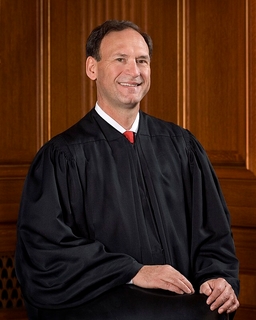
After the petitioner's lawyer argued that the 'uniquely federal interest' test from the case Boyle was on shaky ground, Justice Alito shot back, 'Who wrote Boyle?... Justice Scalia... so you're saying the founding father of textualism doesn't understand textualism.'
This was a sharp defense of a landmark conservative opinion and its author. It signals that some justices see the petitioner's argument not as a narrow distinction but as a fundamental attack on established precedent, suggesting they will be highly resistant to weakening contractor immunity.
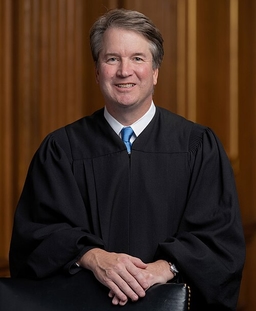
He challenged the petitioner's premise that state law is the default, asking if the baseline shouldn't be flipped for 'uniquely federal interests' like war. He suggested that in such cases, the default is no lawsuits unless Congress specifically acts to allow them.
This question reframes the entire debate. If Kavanaugh's view prevails, the burden isn't on the contractor to find a federal law shielding them; the burden is on the plaintiff to find a federal law that lets them sue in the first place. It's a fundamental shift that would favor federal power and contractor immunity.
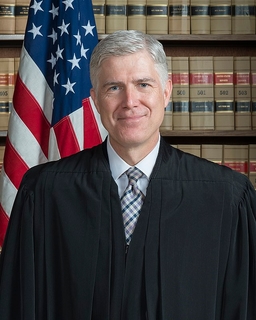
When Fluor's lawyer asked for a new rule extending immunity, Justice Gorsuch asked skeptically, 'So you're asking us to invent a new... supplement to Boyle? Why isn't that a judgment that really cries out for congressional decision?'
This reveals a potential split among the conservative justices. While Alito defended the judge-made rule in Boyle, Gorsuch expressed deep unease with judges creating broad preemption rules out of thin air. He believes that if contractors need more protection, Congress should be the one to provide it, not the Supreme Court.
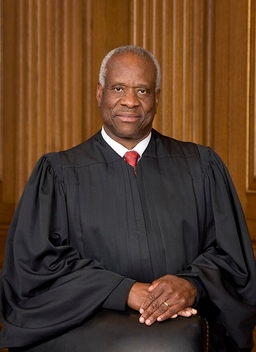
He posed a hypothetical: What if a food service contractor at Bagram Air Base caused a mass food poisoning? Would that lawsuit be preempted? Fluor's lawyer said yes, because everything at Bagram was 'closely connected to combatant activities.'
This exchange tests the limits of Fluor's theory. The affirmative answer shows just how sweeping their claim for immunity is—it covers not just direct combat support but even routine services on a base. This might strike some justices as an overreach, making the rule seem too broad and absolute.
He asked the petitioner's lawyer if, under state choice-of-law rules, it was possible that a lawsuit against a U.S. contractor in Afghanistan could be based on 'the enemy's law' (Afghan law). The lawyer conceded it was possible.
This hypothetical was a gut punch to the petitioner's argument. The image of a U.S. contractor being judged by foreign or even hostile law in an American court highlights the potential for chaos and absurdity if there isn't a uniform federal rule governing these situations. It's a powerful argument for preemption.
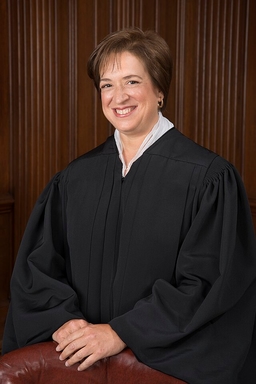
She floated a middle-ground solution: what if a contractor could be sued, but 'if and only if the plaintiff can show that the contractor violated military policy?'
This is a classic 'off-ramp' suggestion. Justice Kagan is searching for a compromise that avoids giving contractors a blank check but also protects them when they are acting in a gray area or at the military's discretion. This could be the landing spot for a majority opinion, as it directly ties liability to disobedience.

When Fluor's lawyer complained that a trial would force him to use the 'empty chair' defense and blame the military, Justice Sotomayor laughed and said, 'This is the first time I've heard a defense attorney... say I'm going to take away an empty chair that I could attack.'
Her laughter signaled deep skepticism of Fluor's practical argument. She saw it not as a genuine legal problem but as a tactical complaint. This suggests she believes the contractor's real goal is to avoid the hassle and discovery of a lawsuit, not that the lawsuit is legally incoherent.
When Justice Alito pressed him on whether Boyle was correctly decided, Mr. Chang dodged, instead pivoting to say he would 'follow what you wrote in Garcia, Your Honor,' citing Alito's own opinion on a related issue.
This was a savvy move by the attorney. It allowed him to avoid directly criticizing Justice Scalia—a hero to the Court's conservatives—while still advancing his argument that preemption should be grounded in actual laws, not judicial policymaking. It showed he was acutely aware of the ideological minefield he was navigating.
Arguments
Petitioner
The petitioner argues that a government contractor, Fluor, should be held accountable under ordinary state law for negligence that led to a soldier being injured in a war zone. The case stems from a bombing at Bagram Air Base where the Army’s own investigation concluded that Fluor’s failure to follow its contractual security duties—specifically, failing to supervise and escort local nationals—allowed a bomber onto the base. The petitioner's core position is that the default rule in the American legal system is that if a person or company injures someone through carelessness, the victim can sue them for damages. This basic principle of responsibility shouldn't disappear just because the negligence occurred on a military base or because the wrongdoer was working for the government.
Fluor, the contractor, is asking for a special shield from this lawsuit by extending a previous Supreme Court decision called Boyle. The petitioner argues this is a misunderstanding of what Boyle established. The Boyle case created a very limited defense for contractors, protecting them only when they are forced to choose between following the government's precise instructions and complying with state law. The logic was to prevent a contractor from being punished for simply doing exactly what the military ordered them to do, even if those orders led to a flawed product. Here, the situation is the exact opposite. Fluor isn't being sued for following military orders; it's being sued because the Army found it violated military orders and its contract. Therefore, the very reason for the Boyle shield—protecting adherence to government commands—doesn't exist in this case.
Ultimately, the petitioner contends this is a question of who has the power to create such a sweeping immunity from lawsuits. The Constitution gives Congress, not the courts, the authority to decide when federal interests should override, or "preempt," state laws. The petitioner points out that Congress has acted in this area before, passing specific laws to protect federal employees from lawsuits or to create compensation systems for civilian contractor employees. Yet, Congress has never passed a law that shields contractors from being sued by the soldiers they injure through negligence. For the court to create such a rule on its own, based on a vague "federal interest" in combat activities, would be a major act of judicial lawmaking. The petitioner argues the court should respect the system Congress has established, where contractors who break the rules and harm soldiers can be held responsible in court.
Respondent
The respondent argues that a state personal injury lawsuit has no place on a foreign battlefield during a time of war. The entire purpose of state tort law is to discourage risk-taking by imposing financial liability for carelessness. But war, by its very nature, requires the military and its contractors to take enormous risks under extreme pressure. Applying a set of rules designed for a peaceful society in South Carolina to active combat operations in Afghanistan creates a fundamental conflict. The respondent contends that the U.S. Constitution makes waging war an exclusively federal power, explicitly forbidding states from engaging in it. Therefore, allowing a state jury to second-guess decisions made in a war zone directly interferes with this unique federal authority.
This interference goes beyond a simple conflict of laws; it actively undermines military command and control. In this view, private contractors operating in a war zone are an integral part of the military's "total force." Allowing soldiers to sue them for injuries sustained in combat would shatter the trust and cooperation essential for battlefield success. More importantly, it would allow a state court to impose its own punishment, overriding the military's judgment. The military already has a full toolkit to discipline contractors—it can terminate contracts, seek damages, or even pursue criminal charges. The military might strategically decide that the best course of action is to continue working with a contractor despite a mistake, prioritizing the overall war effort. A multi-million dollar state lawsuit acts as an "iron fist" that ignores the military's strategic decision to use "kid gloves," effectively letting a state dictate military policy.
To justify this shield from state law, the respondent points to the Federal Tort Claims Act (FTCA), the law that specifies when the U.S. government itself can be sued. The FTCA includes a critical rule called the "combatant-activities exception," which says the government cannot be sued for any claim "arising out of combatant activities... during time of war." The respondent's logic is that if Congress has already decided that the U.S. government itself must be immune from lawsuits related to combat, then it is nonsensical to allow those same lawsuits against the government's essential private partners who are performing the same functions, side-by-side with soldiers in the same line of fire. This isn't about creating a rule where contractors are above the law; it's about recognizing that the location and nature of the activity—waging war—places it entirely under federal control, meaning any remedy for misconduct must come from federal military authorities, not a state civil court.