Bowe v. United States
Digest
A federal prisoner seeking a second chance to challenge his conviction ran into a complex legal roadblock, forcing the Supreme Court to untangle a dense statutory puzzle. The justices weighed whether a rule that automatically dismisses repetitive claims from state prisoners also applies to federal prisoners. Before reaching that question, however, they first had to decide if they even have the power—or jurisdiction—to hear the case, or if Congress stripped them of that authority for these "second or successive" appeals.
The prisoner’s attorney argued the law’s plain text distinguishes between state and federal inmates, and that any limit on the Court’s jurisdiction must be unmistakably clear, which he claimed this statute is not. The government countered that Congress designed a swift, final process that would be undermined by lengthy Supreme Court appeals. Several justices appeared skeptical of creating a procedural loophole, with Justice Alito asking if the prisoner's reading would “make a hash” of Congress's intent to promote finality.
The ruling will determine the procedural hurdles for thousands of federal inmates seeking to challenge their sentences based on new evidence or law. A decision for the prisoner would preserve a path for these claims to reach the Supreme Court. A ruling for the government would effectively close the Court's doors to this entire class of cases, leaving conflicting legal rules in place across the country and affirming Congress's power to limit the Court's oversight.
Key Moments
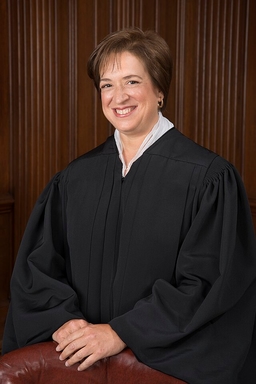
Justice Kagan characterized the petitioner's argument as 'slicing the baloney pretty thin.' She questioned the logic of applying the first few parts of a statute's procedure but then conveniently stopping right before the final part that says 'this process ends here and is not appealable.'
This analogy reveals deep skepticism toward the petitioner's textual argument. It shows that at least one justice sees the statute as a single, indivisible package, which is the core of the government's case.
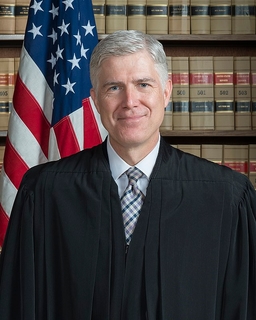
Pressing the petitioner's lawyer, Justice Gorsuch noted that every single circuit court to address this issue has ruled against his position. He then asked bluntly, 'So they're all wrong? All those courts are wrong?' The lawyer had to concede, 'Correct.'
This moment highlights the massive uphill battle the petitioner faces. Overturning a unanimous consensus of all lower courts is a very big ask, and Gorsuch is forcing the petitioner to acknowledge the radical nature of his position.
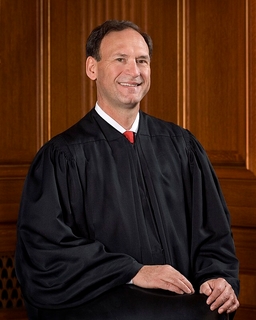
Justice Alito asked if the petitioner's interpretation wouldn't 'make a hash of the procedure that Congress has prescribed,' pointing out the absurdity of a super-fast 30-day appeals court process followed by a potentially years-long, time-unlimited Supreme Court appeal.
This question strongly supports the government's view. It shows that Justice Alito is focused on the practical purpose of the law—finality and speed—and sees the petitioner's reading as completely undermining that purpose.

Justice Jackson posed a hypothetical: What if an appeals court panel ignores the law and just 'rubber stamps' every application as 'denied' without actually reviewing it? She questioned whether the government believes that even such a lawless decision would be unreviewable by the Supreme Court.
This hypothetical tests the limits of the government's 'no means no' argument. It probes whether the jurisdictional bar is absolute, even in the face of procedural breakdown or bad faith by a lower court, opening a potential path for the Court to carve out an exception.
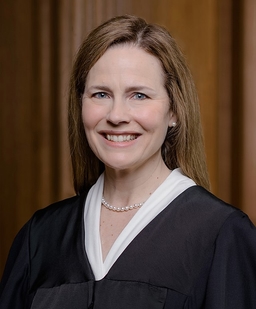
When the petitioner suggested the Court must have jurisdiction to resolve circuit splits to preserve its 'essential function,' Justice Barrett pushed back hard, asking, 'Why wouldn't that completely eviscerate the Exceptions Clause?' which explicitly gives Congress power to limit the Court's jurisdiction.
This reveals skepticism about using a vague 'essential function' argument to override a specific constitutional power granted to Congress. Justice Barrett sees this as a potentially dangerous expansion of judicial power at the expense of the legislative branch.
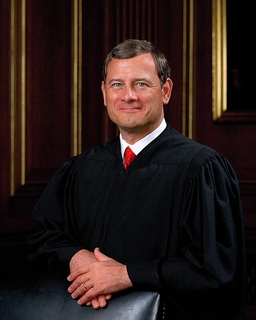
The Chief Justice asked the government's lawyer if his argument would be the same if Congress made the initial trial court judge's decision final and unreviewable, cutting out the court of appeals entirely.
This question pushes the government's logic to its extreme conclusion. The Chief Justice is exploring whether there is any principled limit to Congress's power to strip jurisdiction from federal courts in this area, testing the foundation of the government's argument.
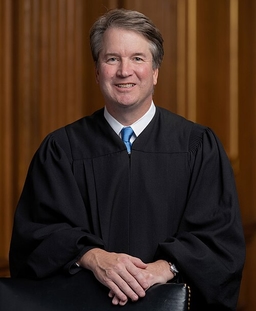
A cross-ideological group of justices repeatedly pressed the government on the 'clear statement rule'—the idea that Congress must be exceptionally clear when it wants to strip the Supreme Court of jurisdiction. They suggested the government was not taking this high standard seriously enough.
This coordination signals a major weakness in the government's case. When justices from different wings of the Court unite on a line of questioning, it often indicates a potential majority view. It suggests the Court may find Congress's language wasn't clear enough to block their review.
In his rebuttal, the petitioner's attorney highlighted a narrow way out for the Court: the lower court 'dismissed' his client's motion, but the statute only bars review of a 'grant or denial.' He argued this textual difference gives the Court jurisdiction without needing to decide the bigger constitutional question.
This is a classic Supreme Court litigation tactic: offering the justices an 'off-ramp.' It allows the Court to rule for his client on narrow, technical grounds, resolving this specific case while avoiding a major, precedent-setting decision on Congress's power to limit the Court's authority.
Arguments
Petitioner
The petitioner argues that a specific rule being used to block federal prisoners from challenging their convictions a second time doesn't actually apply to them. The rule, from a law known as § 2244(b)(1), says that a claim already presented in a prior "habeas corpus application" cannot be raised again. The petitioner’s core point is that the law explicitly ties this rule to § 2254, the statute that deals only with state prisoners challenging their sentences in federal court. Federal prisoners, like Mr. Bowe, use a completely different statute, § 2255. This distinction isn't a mistake; Congress intentionally created separate systems because federal courts must show more deference to state court judgments, a principle known as federalism. Therefore, the lower court was wrong to apply a rule meant for state prisoners to block a federal prisoner's case.
The biggest hurdle for the petitioner is another law, § 2244(b)(3)(E), which acts as a jurisdictional roadblock. This law states that a court of appeals' decision to grant or deny a prisoner's request to file a second challenge "shall not be appealable" and cannot be reviewed by the Supreme Court. In essence, it's a "No Entry" sign telling the Supreme Court it has no power to even look at the case. The government argues that because of this rule, it doesn't matter if the lower court was right or wrong on the main issue—the Supreme Court is legally barred from correcting the mistake. This creates a critical question: can the Court get past this jurisdictional barrier to fix what the petitioner sees as a fundamental misreading of the law?
To get around this roadblock, the petitioner offers several clever arguments, focusing on the precise wording of the law. The simplest one is that their appeal isn't challenging the denial itself, but the reason for the denial. It's like being told you can't enter a club for violating the dress code, and your argument isn't that you met the code, but that the dress code doesn't apply to you in the first place. The petitioner is asking the Supreme Court to rule on this preliminary, or "antecedent," question of which rules apply, something the Court has done before. They also argue that the law only bars review of a "grant or denial," but the lower court technically "dismissed" their motion. This distinction between "dismissing" a case and "denying" it, they argue, creates a loophole that allows the Supreme Court to step in.
Ultimately, the petitioner argues this case is about more than just one person's claim; it’s about the Supreme Court’s essential function. The lower federal courts are split on this issue, meaning a federal prisoner's rights depend on where in the country they live. If the Supreme Court is truly barred from hearing this case, it cannot resolve this split and ensure federal law is applied uniformly. This would effectively make the lower appeals courts the final authority on the law, undermining the Supreme Court's role as the ultimate arbiter of what the law means. The petitioner contends the Court should use one of the narrow jurisdictional paths available to it to step in, clarify the law for everyone, and maintain a consistent justice system.
Respondent
The respondent argues that the Supreme Court has no power to even hear this case because Congress explicitly made the court of appeals the final stop for this type of request. After a person is convicted and loses their direct appeals, they get one chance to challenge their conviction again in what's called a post-conviction motion. The petitioner, Mr. Bowe, has already used his one chance. The law is designed to make it extremely difficult to get a second bite at the apple. To stop the system from being clogged with endless appeals, Congress created a strict gatekeeping process: a prisoner must first get permission—an "authorization"—from a federal court of appeals just to file a second motion. This process is meant to be fast and final, with the court of appeals required to make a decision in just 30 days.
The government's core point is that this fast and final process includes a specific rule, 28 U.S.C. § 2244(b)(3)(E), which states that the court of appeals' decision to "grant or deny" this authorization cannot be appealed to the Supreme Court. While this rule is found in the section dealing with state prisoners, the law governing federal prisoners like Mr. Bowe explicitly says to use the same gatekeeping procedures "as provided in Section 2244." The government contends this means you import the entire process, not just the parts you like. It would make no sense for Congress to demand a 30-day decision from the appeals court to ensure speed and finality, only to then allow a months-long, drawn-out appeal to the Supreme Court. That would completely defeat the purpose of creating a fast-track gatekeeper in the first place.
To support this, the government points directly to the words Congress chose. In some parts of the law, Congress was very specific, writing that a rule applied only to a "habeas corpus application under section 2254" (state prisoners). But in the section banning Supreme Court review, Congress used the much broader phrase "second or successive application," which naturally includes both state and federal prisoners. The rule is simple: when lawmakers use specific language in one place and general language in another, it’s assumed they did it on purpose. By using a general term, Congress made it clear that no one—state or federal prisoner—gets to appeal the gatekeeping decision to the Supreme Court.
Finally, the government dismisses the petitioner's argument that his request wasn't "denied" but was instead "dismissed," and therefore the ban on appeals doesn't apply. This, they argue, is a word game that ignores reality. A dismissal is a denial in practice; it's the court telling the prisoner "no, you cannot proceed." The result is identical. Allowing an appeal to the Supreme Court based on this flimsy distinction would create a loophole that subverts the entire structure Congress built. The goal was finality, and the message from the statute is clear: the court of appeals' gatekeeping decision is the end of the road.