Bost v. IL Bd. of Elections
Digest
Federal law sets one Election Day, but some states like Illinois count mail-in ballots arriving up to two weeks later. The Supreme Court considered a crucial gateway question: does a political candidate automatically have the right to sue over such rules? To enter federal court, a person must show a concrete injury, a requirement known as “standing.” This case asks if simply being a candidate is injury enough, or if they must first prove the rule creates a real risk of them losing. The candidate’s lawyers argued that changing election rules inherently harms all competitors and pointed to the financial cost of monitoring a longer vote count. Illinois countered that without a “substantial risk” of losing, a candidate’s complaint is an abstract grievance, and allowing such suits forces courts to become political oddsmakers. The decision will determine when election rules can be challenged. A ruling for the candidate would make it easier for any politician to sue over voting laws before an election. A ruling for the state would make challenges harder, likely pushing more legal fights into the chaotic post-election period for only the closest races.
Key Moments
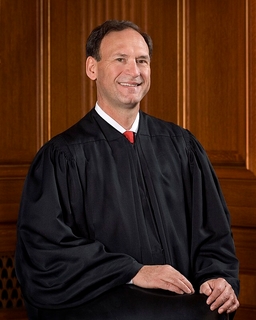
He asked if any of eight Olympic sprinters would have a valid legal injury if they showed up for a 100-meter dash and were suddenly told they had to run 105 meters instead.
This powerful analogy perfectly framed the petitioner's entire case: the injury isn't losing the race, it's that the fundamental rules of the competition were changed. It signals he sees an inherent harm to all competitors when the rules are altered.
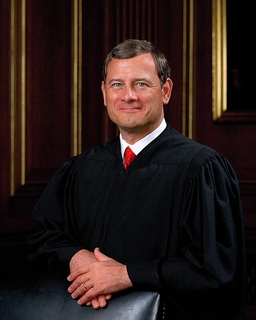
He called the state's proposed rule—that only candidates in close races have standing—a 'potential disaster,' forcing courts to make last-minute predictions about election outcomes.
This reveals the Chief Justice's deep practical concern. He fears turning federal judges into political oddsmakers right before an election, which he sees as a recipe for chaos and a threat to the judiciary's credibility. This is a major red flag for the state's position.
She asked if a candidate in a district that is 98% Republican would still have standing to sue over an election rule, even with a 'statistically almost impossible chance of losing.'
This was the perfect counter-hypothetical to Justice Alito's. It exposed the logical extreme of the candidate's argument, suggesting it would allow candidates with no real stake in the outcome to clog the courts with lawsuits over trivial or abstract complaints.
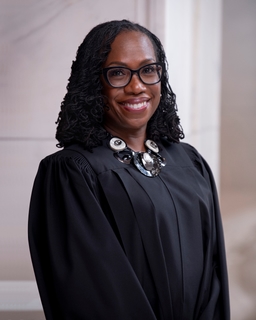
She told the candidate's lawyer that 'harm is what you need in order to establish standing, not preference for 60 percent or 59 percent or whatever.'
This was a blunt and direct dismissal of the idea that a diminished margin of victory constitutes a legal injury. It shows she holds a very traditional and strict view of standing, requiring a tangible, outcome-determinative risk, not just a less-than-ideal result.
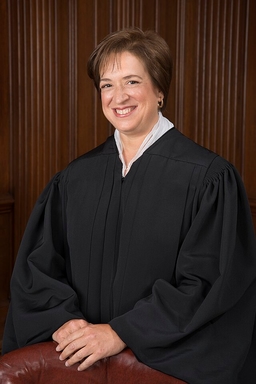
She accused the petitioner of trying to create a special rule where 'if a candidate is there before the court, the candidate has good reasons for being there.' She noted, 'for the most part, I think we have rejected that view of standing.'
This frames the candidate's argument as a radical attempt to carve out a special exception to a core constitutional doctrine. By calling it a bespoke rule the Court has already rejected, she's signaling that the petitioner is asking for a major, and likely unwelcome, change in the law.
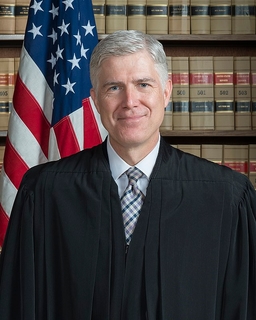
He asked what would happen if a state changed the rules to require ballots be printed on 'cream paper' instead of white paper. 'Then it's harder to see an injury, right?'
This shows Justice Gorsuch, while sympathetic to the candidate, is searching for a limiting principle. He's concerned that the candidate's theory—that any rule change is an injury—goes too far. He wants to know how to separate significant rule changes from trivial ones.
He argued that the state's position would dangerously force federal courts to become the 'Article III equivalent of the Cook Report,' a famous political newsletter that forecasts elections.
This was a highly effective, punchy soundbite that encapsulated Chief Justice Roberts' fears. It vividly painted the opposing argument as an unworkable and inappropriate role for the judiciary, turning judges into political pundits.
When Justice Kagan proposed a middle-ground rule for standing, the attorney didn't engage with it directly, instead pivoting to say, 'I actually don't think we would have any problem at all with that rule,' before immediately arguing the petitioner still couldn't meet that standard.
This pivot suggests the state's legal team saw their primary argument—that a candidate must show a risk of losing—was facing heavy skepticism. They strategically shifted to a fallback position, essentially conceding the legal principle to fight on the specific facts of the case, which can be a sign of weakness.
Arguments
Petitioner
The petitioner argues that a candidate running for federal office should always have the right to sue over the rules of their own election. To bring a lawsuit in federal court, a person needs what's called "standing," which is just a legal way of saying they have to prove they have a personal stake in the fight and have been directly harmed. The petitioner’s core point is that for a candidate, this harm is obvious. They are not a random citizen with a general complaint; their name is on the ballot, and their entire professional life is on the line. Changing the rules of the election—in this case, by counting ballots that arrive up to two weeks after the federally mandated Election Day—is like changing the length of a race from 100 meters to 105 meters after the runners are already in the starting blocks. Every runner is inherently harmed by this change, even if you can't prove who would have won the shorter race.
Beyond this common-sense argument, the petitioner points to two very specific and concrete injuries. The first is a "pocketbook injury." Because Illinois law extends the vote-counting period for two weeks, the candidate is forced to spend more money. Campaigns must pay staff, lawyers, and volunteers to monitor the ballot-counting process for those extra 14 days. This isn't an optional expense; the petitioner notes it would be "political malpractice" not to do it. This extra cost is a direct, measurable financial harm caused by the state's law. The second injury relates to the margin of victory. A candidate doesn't just want to win; they want to win by a lot. A large victory provides a stronger political mandate, makes fundraising easier, and can discourage future challengers. By counting what the petitioner considers to be unlawful ballots, the state's law could shrink a candidate's margin of victory, causing a real reputational and financial harm, even if it doesn't change the ultimate outcome of who wins or loses.
Finally, the petitioner warns that making it difficult for candidates to sue creates a dangerous and chaotic system. If a court has to first decide whether an election is "close enough" for a candidate to have standing, it forces judges to become political fortune-tellers. This would lead to lawsuits being filed only in the tightest races and often after the election, when tensions are highest and a court's decision could be seen as picking the winner. The petitioner argues for a simpler, cleaner rule: let candidates challenge the rules of the road before the race even starts. This allows courts to resolve legal disputes in a calm, orderly way, rather than being dragged into political firestorms at the last possible second.
Respondent
The respondent argues that a candidate can't sue over an election rule just because they don't like it; they must first prove the rule causes them real, concrete harm. This is a fundamental requirement for anyone who wants to bring a lawsuit, known as "standing." Think of it as a ticket to get into court. The respondent insists that candidates don't get a special, automatic ticket. Mr. Bost, the candidate suing, claims he is harmed by Illinois's law allowing ballots to be counted for 14 days after Election Day. But the respondent says his claims are too vague and speculative to count as a real injury. He hasn't shown that he is actually in danger of losing the election because of this rule—in fact, his lawyers have admitted he is expected to win easily.
The respondent then dismantles the specific injuries Mr. Bost claims. First is the idea that the rule could cause him to lose the election. The respondent argues that a mere "what if" is not enough. The law requires a "substantial risk" of harm, not a theoretical possibility. Since Mr. Bost is in a safe district and not in danger of losing, this fear is pure speculation. Second, Mr. Bost claims the rule could shrink his margin of victory. The respondent dismisses this as simply wanting to "run up the score," which is not a legally protected right. A win is a win, and the courts don't exist to protect a candidate's preference for winning by a larger amount. To the respondent, these are not concrete injuries but abstract political grievances that don't belong in a federal court.
Next, the respondent addresses Mr. Bost's most tangible claim: that he is harmed because he has to spend extra money to pay poll watchers for the additional 14 days of counting. While spending money can be a legal injury, the respondent argues it only counts if the money is being spent to prevent a real, legally recognized harm. Here, they argue Mr. Bost is spending money to guard against a harm—losing the election—that isn't a substantial risk. It’s like buying an expensive umbrella on a perfectly sunny day and then suing the weather channel for your expense because they mentioned a 1% chance of rain. The respondent argues you can't create a legal injury just by choosing to spend money to fight a phantom threat.
Ultimately, the respondent warns the Court that siding with the candidate would open a Pandora's box, causing chaos for elections. If any candidate can sue over any rule without proving they are actually harmed, election officials would be constantly defending against lawsuits based on policy disagreements. Federal judges, who are supposed to be impartial, would be forced to become political referees, making last-minute decisions about how elections should be run. The respondent's position is a gatekeeping one: the courthouse doors should only open for people with real injuries, not for candidates who simply want a judge to weigh in on a political fight or change a rule that doesn't actually threaten their election.