Barrett v. United States
Digest
When a robbery ends in murder, can the government impose separate, consecutive prison sentences for both using a gun during the crime and for the killing itself? The Supreme Court weighed this question, which tests the Fifth Amendment’s protection against “double jeopardy,” or being punished twice for the same offense. At issue is whether using a firearm in a violent crime is a lesser, built-in component of committing murder with that same firearm. If so, the default rule is that a person can only be punished for the more serious crime unless Congress explicitly authorized punishing for both.
The defendant—and, in a rare agreement, the U.S. government—argued that Congress never clearly authorized stacking these two punishments. However, a court-appointed attorney countered that other statutory language requiring sentences to be served consecutively makes Congress’s intent plain. Justices explored whether forbidding separate punishments could create an absurd result where a defendant who commits murder might face a lighter sentence than one who only brandishes a weapon.
The ruling will clarify how explicitly Congress must write criminal laws to impose multiple punishments for a single criminal act. A decision for the defendant would strengthen protections against prosecutors “piling on” charges, while a decision against him would grant more leeway to impose longer, consecutive sentences for crimes that are part of the same violent episode.
Key Moments
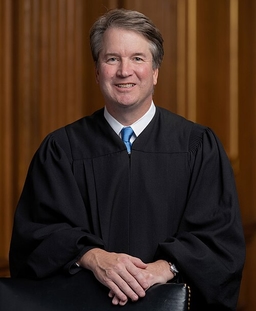
Justice Kavanaugh read directly from the statute, which says any sentence under this section cannot run 'concurrently with any other term of imprisonment,' and bluntly told the petitioner's lawyer, 'I don't know how that could be clearer.'
This is the entire case against the petitioner in a nutshell. Kavanaugh's skepticism reveals the major obstacle: the statutory text seems to explicitly authorize stacking punishments, making it hard to argue Congress wasn't clear.

He posed a hypothetical about a 'very well versed' criminal who realizes that the punishment for a simple gun crime is five years, but the punishment for a more serious crime (with more elements) is only one year. The criminal then decides, 'Let me go ahead and commit the greater offense' to get a lighter sentence. 'Does that make any sense?' Alito asked.
This 'perverse incentives' hypothetical is a powerful tool to test a legal rule. It shows Alito's concern that the petitioner's interpretation would create an illogical and absurd result in the real world, which is a strong reason to reject it.

Responding to Justice Kavanaugh's point about the clear text, Justice Jackson distinguished between the question of multiple 'convictions' and how 'punishments' are served. She suggested the rule about sentences not running concurrently only applies after you've decided someone can be legally convicted of two separate crimes.
This provided the petitioner with a crucial counter-narrative. It shows a potential majority of the Court could be forming around the idea that Double Jeopardy protects against a second conviction itself, and a sentencing statute can't fix that constitutional problem.

He took a step back from the specific statutes and asked, 'Where does that presumption come from?' He questioned the entire legal foundation that both sides had agreed on: that Congress must 'speak clearly' to impose double punishments.
This is classic Gorsuch. It signals he might be interested in a much broader ruling that re-examines the Court's entire Double Jeopardy framework, potentially changing the rules for all future cases, not just this one.
He grilled the government's lawyer about why they were now agreeing with the petitioner. He pointed out that in a previous case (Lora), the government argued the exact opposite and even told the Court how to write its opinion to avoid the current mess. 'So what happened then?' he demanded.
This highlights the Court's frustration with the government changing its legal positions. It shows judicial skepticism about the government's motives and suggests the justices don't feel bound by the government's new 'agreement' with the petitioner.

Building on Justice Alito's 'does it make sense' theme, Sotomayor flipped it to support the petitioner. She noted that the sentencing anomaly Alito was worried about (where the greater crime gets less time) did not exist when Congress originally passed the law.
This is a sharp historical counter-attack. It suggests the Court should interpret Congress's intent based on the context when the law was written, not based on weird outcomes created by later amendments, undercutting the 'absurd results' argument.
On rebuttal, Larsen forcefully argued that the Double Jeopardy Clause bars two convictions. Therefore, the statute about sentences running consecutively is irrelevant because you can't get to the sentencing stage for a second crime if the second conviction was unconstitutional to begin with.
This was a concise and powerful restatement of his core argument, directly addressing the biggest hurdle (Kavanaugh's point) and crystallizing the central distinction between conviction and sentencing for the justices to consider during deliberations.
In a moment of levity, Justice Gorsuch joked with an amicus attorney who brought up the deep theory behind a legal test, saying 'you put the dog in the fight this time,' leading to laughter. The attorney replied, 'Well, let me defend the dog.'
While humorous, this exchange shows the justices are willing to engage in a deep, academic debate about the foundational principles of criminal law. It signals that this case isn't just about parsing a few words in a statute; it's about fundamental constitutional rules.
Arguments
Petitioner
The petitioner argues that the Constitution’s Double Jeopardy Clause prevents someone from being punished twice for the same exact crime. In this case, Mr. Barrett was convicted for two crimes based on a single act: first, for using a gun during a robbery under a law known as § 924(c), and second, for killing someone with that same gun during the same robbery under a related law, § 924(j). The petitioner’s core point is that these are not two separate crimes, but rather one is a lesser version of the other. It is impossible to commit the bigger crime (killing someone with a gun during a robbery) without also committing the smaller, included crime (simply using a gun during a robbery). Because they are legally the "same" offense, the law presumes Congress only intended one punishment for the single act.
While Congress has the power to override this presumption and punish for both the greater and lesser crime, it must say so with unmistakable clarity in the law. The petitioner argues that Congress has not done that here. The government points to a rule in the lesser statute, § 924(c), which says its sentence must run "consecutively"—meaning it must be tacked on after any other sentence. They claim this is the clear signal from Congress. But the petitioner explains this puts the cart before the horse. That rule about how to serve a sentence only matters if a court can legally impose a sentence for § 924(c) in the first place. The whole point of the double jeopardy protection is to block that second conviction and sentence entirely. A procedural rule about sentencing cannot authorize an otherwise unconstitutional second punishment for the same act.
The history of these laws reveals Congress’s true intent. Lawmakers created the more serious crime, § 924(j), specifically because they felt the penalty for just using a gun wasn't severe enough when that use resulted in death. So, they wrote a new law with its own massive punishments, including life in prison and even the death penalty. The petitioner argues that Congress designed this new, harsher law to be the standalone, comprehensive punishment for a fatal shooting, not something to be stacked on top of the lesser gun charge. It makes no logical sense to think Congress wanted to add a five-year sentence to a life sentence or a death penalty. Without a clear command to do so, courts should not pile on punishments for what is, fundamentally, one criminal act.
Respondent
The respondent argues that a person cannot be punished twice for the same fundamental act, a protection rooted in the Constitution's Double Jeopardy Clause. In this case, there are two laws at issue: one for using a gun during a violent crime (§ 924(c)) and a more serious one for using a gun during a violent crime that results in someone's death (§ 924(j)). The respondent's position is that the first crime is a "lesser-included offense" of the second—meaning, you cannot possibly commit the murder version without also committing the basic gun-use version. It's like a value meal at a fast-food restaurant; you can't be charged for the whole meal and then also be charged separately for the fries that are already included inside it.
The core of the argument rests on a simple rule of fairness: unless Congress speaks with crystal clarity, courts should assume it did not intend to punish a person twice for what is essentially one crime with a tragic outcome. The respondent points out that in other parts of the law, Congress was very clear, using explicit phrases like "in addition to" to authorize stacking punishments. However, when Congress wrote the more serious murder provision (§ 924(j)), it conspicuously left that language out. The respondent contends this wasn't a mistake; it was a deliberate choice. Congress knew how to authorize double punishment when it wanted to, and its silence here signals that it wanted a single, severe punishment for the killing, not two separate ones.
The other side points to a different part of the law that says sentences for these gun crimes must run "consecutively"—one after the other, not at the same time—and claims this is the clear statement needed. The respondent counters that this confuses two different stages of the legal process. The Double Jeopardy rule is about whether you can be convicted of two crimes in the first place. The rule about consecutive sentences is just about how to schedule the prison time after you have been legally convicted. The respondent argues you can't use a scheduling rule to justify a conviction that was never allowed to begin with. The first question is "how many crimes?" and only then do you ask, "how should the sentences be served?"
Finally, the respondent addresses the seemingly odd result that their interpretation could lead to a lesser mandatory sentence for the more serious crime of killing someone. They explain that Congress created two different punishment systems on purpose. For the basic gun crime, it used a rigid system of mandatory minimums. But for the far more grave crime of murder, it gave judges the traditional, flexible, and more powerful tools used for all federal murders—including sentences up to life imprisonment or even the death penalty. Congress wasn't making the punishment weaker; it was simply trusting judges to use their discretion to impose a fitting and severe sentence for murder, rather than relying on the rigid formula of the lesser offense.