Chiles v. Salazar
Digest
A Colorado counselor is challenging a state law that forbids her from providing voluntary talk therapy to minors seeking to align their gender identity with their biological sex. The Supreme Court must now decide if this law is a permissible regulation of professional “conduct” or if it is unconstitutional censorship of “speech” that violates the First Amendment.
The counselor argued that the law is clear viewpoint discrimination, permitting therapy that affirms a minor’s LGBTQ identity while banning therapy that explores a different path, even with parental consent. The state of Colorado countered that it is not regulating ideas but rather a harmful medical treatment that falls outside the established standard of care, much like it would regulate a dangerous surgical procedure. Several justices grilled the state on this logic, asking if a different state could then ban gender-affirming therapy by citing its own set of medical experts. A ruling for Colorado could grant states broad power to control conversations in the therapy room, while a ruling for the counselor would shield those private discussions as protected speech.
Key Moments
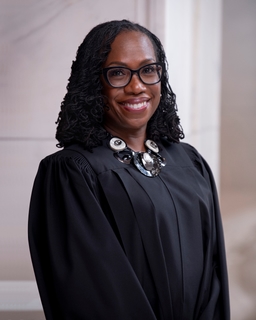
I'm struggling with whether a therapist acting in their professional capacity is really 'expressing a message' for First Amendment purposes. How is this different from a doctor prescribing medication to achieve the same goal?
This question goes to the heart of the case. If therapy is just 'conduct' like prescribing a pill, the government has broad power to regulate it. If it's 'speech,' it gets strong constitutional protection. This reveals a fundamental skepticism of the petitioner's entire case.
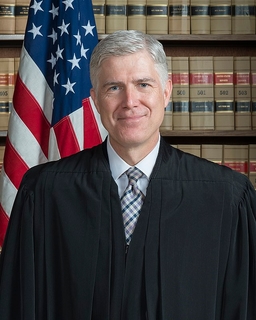
In the 1970s, the medical consensus was that homosexuality was a disorder. Under your theory, could a state have banned therapy that affirmed a gay identity back then?
This devastating hypothetical flips the script on the state. It shows how the state's power to regulate 'harmful' professional speech could be used to enforce outdated or discriminatory views, making the state's argument seem dangerous and politically charged.
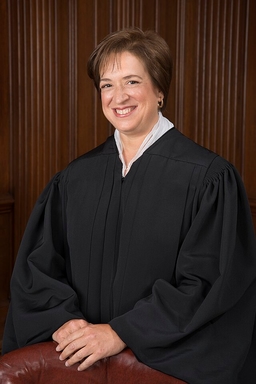
What if a state passed the exact opposite law, banning therapists from helping a child accept a gay or trans identity? Would you make the same First Amendment argument against that law?
This tests the petitioner's consistency. By forcing them to agree that their principle protects all viewpoints, Justice Kagan establishes that the case is about the neutral principle of free speech, not just protecting one specific viewpoint.
The law hasn't been enforced for six years, and the state says it won't apply it to your kind of therapy. How can you claim you're under an imminent threat? How do you even have standing to sue?
This signals the Court could dodge the big First Amendment question entirely on a technicality. If the petitioner can't prove they are genuinely at risk of prosecution, their case could be dismissed without the Court ever deciding the main issue.
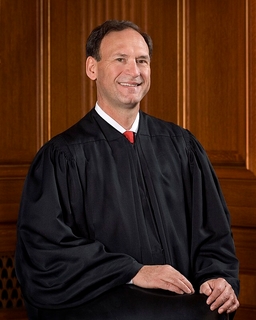
How can you square your interpretation with the plain meaning of this statute? Are you just asking us to ignore the part of the law that begins with the word 'including' because it hurts your case?
This is a direct attack on the credibility of the state's legal argument. Justice Alito is accusing the state's attorney of twisting the law's text to win, suggesting he believes the state's position is weak and not based on what the law actually says.
Does a state need a scientific study to tell a dietitian not to encourage an anorexic patient to eat less? Some advice is so obviously harmful it can be banned, right?
This is the sharpest counterargument to the petitioner's position. It suggests there's a common-sense limit to free speech for professionals, and that the government doesn't need to meet a super-high burden of proof to prohibit advice that is clearly dangerous.
When pressed by Justice Gorsuch on whether her argument would allow 'mirror image' laws, the state's attorney repeatedly tried to pivot back to the narrow facts of the case, saying the Court didn't need to reach that question.
This evasion is a sign of weakness. It shows the state's lawyer is unwilling or unable to defend the logical consequences of her own legal theory, which suggests the theory itself may be flawed.
In rebuttal, the attorney argued the law is clear viewpoint discrimination because a minor can get therapy to transition without parental consent, but is barred from getting therapy for the opposite viewpoint even with parental consent.
This was a powerful closing argument that crystallized the petitioner's central claim. By highlighting the asymmetry in the law, he framed it not as a neutral health regulation but as a direct, one-sided government intervention into a personal debate.
Arguments
Petitioner
The petitioner argues that a Colorado law banning certain types of counseling for minors is an unconstitutional violation of free speech. The law forbids licensed counselors, like Kaley Chiles, from having conversations with clients under 18 that are aimed at changing their sexual orientation or gender identity. The core of Chiles's argument is that her therapy consists only of talking; she does not prescribe drugs, perform procedures, or engage in any physical conduct. Therefore, she claims the government is not regulating a medical treatment or professional action, but is instead censoring the private conversations between a therapist and her client, which should be protected by the First Amendment.
The petitioner claims the law is a classic example of "viewpoint discrimination," which is almost always illegal under the First Amendment. This means the government isn't banning all discussion of a topic, but is instead taking sides in a debate and silencing the one it dislikes. Under the Colorado law, a counselor is free to help a minor explore their feelings and affirm a gender identity different from their sex at birth. However, if a minor comes to a counselor wanting help to become comfortable with their biological sex and resolve feelings of gender dysphoria, the law forbids the counselor from helping them achieve that specific goal. The petitioner argues this creates a system where the government has approved one message and banned another, effectively turning therapists into state mouthpieces for one particular viewpoint on gender and sexuality.
Because the law targets a specific viewpoint, the petitioner insists the court must apply the highest level of judicial review, known as "strict scrutiny." This standard requires the government to prove two things: that it has an overwhelmingly important reason for the law (a "compelling interest"), and that this specific ban on speech is the only possible way to achieve its goal. The petitioner argues Colorado cannot meet this high bar, especially since it hasn't produced any reliable scientific studies showing that this specific type of voluntary talk therapy causes harm. The larger danger, they argue, is that if the government can ban this conversation based on the current medical consensus, it could do the same for any disfavored viewpoint in the future. For example, they point out that in the 1970s, the same logic could have been used to ban therapy that affirmed homosexuality, showing the risk of allowing the government to censor private therapy sessions based on prevailing political or scientific views.
Finally, the petitioner directly confronts the state's position that this is simply the regulation of professional conduct, not speech. They rely heavily on a past Supreme Court case, NIFLA v. Becerra, which established that professionals do not lose their First Amendment rights just because they are speaking as part of their job. The petitioner argues that calling talk therapy "conduct" is a word game designed to strip it of constitutional protection. When the service being provided is the conversation itself, banning certain conversations based on the ideas they contain is a direct attack on free speech, not a regulation of professional practice like malpractice.
Respondent
The respondent argues that this law does not violate free speech because it regulates the professional conduct of a healthcare provider, not the public expression of ideas. The state’s position is that when a licensed therapist is in a private session with a minor, they are not simply having a conversation; they are providing a medical treatment. Just as the state can prohibit a surgeon from performing a dangerous and outdated operation, it can prohibit a therapist from performing a harmful and ineffective therapy, even if that therapy is delivered entirely through words. This argument hinges on the special, high-stakes relationship between a professional and a client. A patient trusts a licensed professional to provide care based on established medical standards, not personal opinions, and the state claims a fundamental power to set safety rules for this conduct to protect vulnerable patients.
To counter the accusation that the law is targeting a disfavored viewpoint, the state emphasizes that the ban is based on the established "standard of care." This is the baseline level of competence and safety that every major medical and mental health organization in the country agrees upon. For decades, these expert organizations have concluded that "conversion therapy" is not only ineffective but also carries a high risk of causing severe harm, including depression and suicide, especially in minors. By banning it, the state argues it is not inventing a new rule to suppress a belief system, but is simply enforcing the existing professional consensus, much like it would punish a doctor for malpractice. This is why the state's lawyer tries to avoid hypotheticals about what a state could do if medical opinion were different; her argument is that this specific law is a legitimate regulation precisely because it aligns with the overwhelming, evidence-based view of the entire medical profession.
The state also argues the law is very narrowly targeted at the source of the harm. It only applies to licensed professionals when they are actively treating a minor patient. It does not stop the petitioner, Ms. Chiles, from writing books about her views, giving public speeches, or even telling a patient her personal opinion on the matter outside of a formal treatment plan. It also doesn't apply to religious counselors or life coaches, who are not licensed by the state. The critical legal distinction, according to the state, is the purpose of the therapy. A therapist is free to help a minor explore their feelings about their identity and cope with distress. However, the moment the therapist begins treatment with the specific goal of changing the minor's sexual orientation or gender identity, they have crossed the line from permissible counseling into performing a discredited and harmful procedure.
Ultimately, the state warns that a victory for the petitioner would radically redefine all professional regulation. It could mean that any licensed professional—from a doctor telling a patient not to use a debunked cancer treatment to an engineer giving faulty advice on a building's structure—could claim a First Amendment right to provide harmful advice, as long as it's delivered with words. This would cripple the state's ability to enforce standards of care and protect the public from malpractice. The state is asking the Court to recognize that a therapy room is not a public square for debating ideas; it is a clinical setting where vulnerable people receive treatment, and the government must be able to ensure that treatment is safe.