Berk v. Choy
Digest
When a patient sued for medical malpractice over a foot injury, his case was stopped before it could begin. He ran into a Delaware law requiring that all such complaints be accompanied by a sworn statement from a medical expert confirming the case has merit. The Supreme Court is now deciding whether this state-level requirement can be enforced in federal courts, which have their own uniform rules for how lawsuits are filed.
The patient’s lawyer argued that Delaware’s rule directly conflicts with the federal system’s core principle of “notice pleading,” where a case starts with a simple complaint and evidence is gathered later. Forcing a plaintiff to essentially prove their case before discovery begins, he claimed, fundamentally upends the federal process. Conversely, the doctor’s attorney contended the affidavit is a substantive part of Delaware’s malpractice law, not just a procedural hurdle, and is a valid tool for states to weed out frivolous lawsuits.
The ruling will determine whether states can create special, front-loaded requirements for lawsuits filed in the federal system. A decision upholding the Delaware law could allow states to make it significantly harder and more expensive for individuals to bring claims, creating a patchwork of different procedural barriers across the nation’s federal courts.
Key Moments
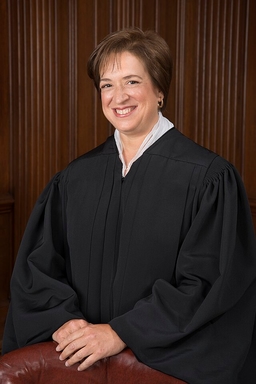
What if a state got tired of the simple federal pleading system and decided to bring back a much harder, fact-intensive one? Could they do it just by saying the extra requirements must be in a separate document called an 'affidavit' instead of the complaint itself?
This hypothetical exposed the core weakness in the respondent's argument. It shows that if the Court accepts that calling something an 'affidavit' lets it bypass federal rules, states could effectively dismantle the entire federal system of litigation piece by piece, simply by being clever with labels.
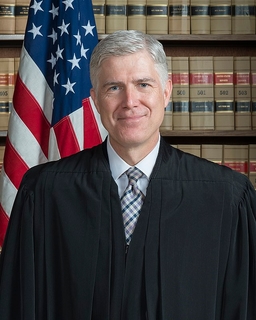
To make the Delaware law work in federal court, you're asking us to pick and choose which parts apply. What authority does a federal court have to create this 'Frankenstein of a statute' by rewriting Delaware law?
This powerful analogy reveals deep skepticism about the practicality and legitimacy of the respondent's position. It suggests that trying to merge the two systems is an unprincipled act of judicial engineering, rather than a straightforward application of law, which is a major concern for a justice focused on judicial restraint.
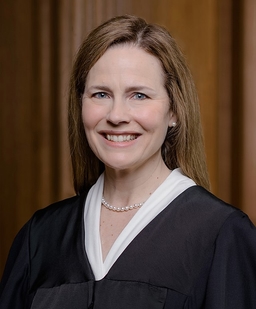
Federal Rule 8 applies to 'pleadings.' An affidavit is not a pleading. So, tell me exactly why Rule 8 prevents this state law from applying?
This question highlights the textualist challenge to the petitioner's case. It forces the attorney to argue that the spirit and purpose of the federal rules are being violated, even if the literal text of one specific rule doesn't create a direct conflict. It signals a potential divide between justices who look for a direct textual clash and those who look at the overall system.
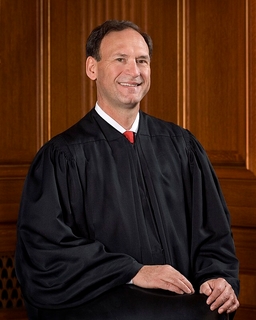
What if Delaware law made it clear that you simply cannot win a malpractice case unless you submit this type of affidavit? In other words, what if it's an essential element of the legal claim itself?
This tests the line between substance and procedure. Alito is exploring whether a state could immunize its law from federal preemption by framing it as a non-negotiable part of the right to sue, rather than a procedural step. It's a sophisticated legal question that gets to the heart of the Erie doctrine.

You're rewriting the Delaware law to make it fit conveniently into your argument. The state law is clear, and you're misrepresenting it to avoid a conflict with the federal rules.
This was a direct shot at the credibility of the respondent's counsel. It shows that at least one justice believes the argument that the state and federal rules can coexist is based on a distorted reading of the state law, making the entire position seem weak and contrived.

After Justice Barrett pressed the petitioner on Rule 8, Justice Jackson suggested that the petitioner's stronger argument might be the conflict with Rule 3, which says an action is 'commenced by filing a complaint.'
This is a clear example of 'justice coordination' and a signal of a potential off-ramp for the Court. Justice Jackson is offering the petitioner a lifeline, suggesting a narrower, cleaner path to victory: arguing the Delaware law illegally adds a requirement to the simple act of 'commencing' a suit, which might be an easier conflict to prove than one with the broader pleading rules.
Suppose Delaware required not one, but four affidavits from four different doctors, all of whom had to swear that malpractice definitely occurred, before the lawsuit could even begin. Under your theory, that would have to be fine, right?
This is a classic 'slippery slope' argument. By pushing the respondent's logic to its extreme, Justice Kagan demonstrated that his theory would allow states to create impossibly high barriers to entry, effectively forcing plaintiffs to win their entire case before they're even allowed discovery. It makes the respondent's position look unreasonable.
In rebuttal, the petitioner's lawyer argued against allowing states to add pre-suit requirements by labeling them 'affidavits,' using the memorable '12 nuns formulation' as a reductio ad absurdum.
This was a powerful moment of advocacy that crystallized the petitioner's core argument in a memorable way. By using a vivid and slightly absurd example, the attorney reinforced Justice Kagan's point that the respondent's logic has no limiting principle, effectively arguing that a ruling for Choy would open the floodgates to states gutting federal procedure.
Arguments
Petitioner
The petitioner argues that Delaware's law requiring an expert affidavit is an illegal gatecrasher in federal court. Federal courts have their own comprehensive rulebook, the Federal Rules of Civil Procedure, which tells everyone exactly how a lawsuit is supposed to start and proceed. Rule 8 of that book says that to begin a case, a plaintiff (the person suing) only needs to file a "complaint" that gives a short and plain statement of their claim. The entire point is to make access to justice simple and direct. Delaware's law directly attacks this by adding a major hurdle: a plaintiff’s complaint must be dismissed unless they first find a medical expert willing to sign a sworn statement (an affidavit) that the case has merit. The petitioner contends that you cannot have two conflicting sets of entry rules; in federal court, the federal rules must be the only ones that matter.
This conflict is about the fundamental design of the justice system. The federal system uses "notice pleading," where the initial complaint just gives the other side notice of what the lawsuit is about. The heavy lifting of gathering evidence happens later, during a process called discovery. Delaware's law completely flips this script. It forces a plaintiff to essentially prove a key part of their case before it even officially begins and, crucially, before they have the power to get evidence from the other side through discovery. The petitioner argues this isn't just an extra piece of paper; it’s a fundamental change to the game. It creates a system where you have to win a mini-trial just to be allowed to have the real trial, which is exactly what the federal rules were designed to prevent.
The petitioner warns that if Delaware's law is allowed in federal court, it would create a massive loophole for states to undermine the entire federal system. If a state can require one expert affidavit, what stops it from requiring four? Or requiring those experts to swear they are 100% certain of the defendant's negligence? This would allow states to effectively block access to federal courts by creating impossibly high barriers at the outset, all while claiming their rules aren't technically part of the "complaint." This would destroy the national uniformity the federal rules were created to provide, forcing federal courts to stitch together a "Frankenstein" of state and federal procedures. The rules for getting into federal court would suddenly be different depending on which state you're in, defeating the whole purpose of having one federal system.
Finally, the petitioner tackles the argument that this is permissible because the federal rules only govern "pleadings," and an affidavit is a separate document. The petitioner dismisses this as a word game. They argue that, functionally, Delaware's affidavit requirement is a super-pleading. It's a document that must be filed at the very beginning, it controls whether the case can proceed, and its sufficiency is immediately judged. They highlight the absurdity of the rule by pointing out that the affidavit is often kept secret from the defendant and can't even be used as evidence. They call this "Schrödinger's law": if it isn't evidence, then its only possible function is to serve as a heightened pleading requirement in disguise. By labeling its procedural roadblock an "affidavit," Delaware is trying to do exactly what the federal rules forbid: making it harder to start a lawsuit than the simple "short and plain statement" allows.
Respondent
The respondent argues that the Delaware law requiring an expert affidavit can and must be applied in federal court because it is a core part of the state's substantive law, not a procedural rule that conflicts with federal court procedures. The argument is that there is no actual collision between the two sets of rules. The Federal Rules of Civil Procedure tell a plaintiff how to file a complaint and manage the lawsuit's mechanics. The Delaware law, in contrast, defines what a valid medical malpractice claim is in the first place. It essentially says that in Delaware, a viable claim for medical negligence doesn't truly exist until a medical expert has confirmed there are reasonable grounds for the suit. Therefore, a plaintiff can follow all the federal rules for filing their case and still be required to satisfy this separate, state-created condition for their lawsuit to survive.
This distinction is rooted in the idea of federalism, which gives states the power to create and define their own laws. The respondent contends that Delaware, like many states, passed this law to solve a serious policy problem: frivolous medical malpractice lawsuits that drive up healthcare costs. The affidavit requirement is the state's chosen solution—a gatekeeping tool to ensure that only potentially meritorious cases proceed. To allow a plaintiff to bypass this requirement simply by filing in a federal courthouse would undermine the state's authority to regulate its own legal system and would create an unfair loophole. It would mean that the legal rights and obligations of the parties change depending on which building the lawsuit is filed in, which is precisely what the system is designed to avoid in cases based on state law.
The respondent explains that federal courts have plenty of tools to enforce this state requirement without breaking their own rules. For example, after a lawsuit is filed, a defendant can ask the judge for an order compelling the plaintiff to produce the affidavit. If the plaintiff fails to do so, the defendant can then file a motion for summary judgment or dismissal. This isn't because the initial complaint was filed incorrectly under federal rules, but because the plaintiff is unable to satisfy a fundamental element of the state law they are suing under. The respondent argues this is not a radical idea; federal courts regularly apply substantive state laws using their own procedural mechanisms.
Ultimately, the respondent’s position is that the petitioner is creating hypothetical conflicts where none exist. They argue that if a state law can be applied in a way that respects both the state's substantive policy and the federal court's procedures, the court must do so. Discarding the entire state law because some of its minor procedural details might clash with federal rules would be an extreme step that disrespects the balance of power between state and federal governments. The core requirement—getting an expert to vet the case—is a substantive condition that is central to Delaware's medical malpractice law and must be honored regardless of the court in which the claim is heard.